We are taking it a little easy on our last day in Cambodia. We are getting laundry done and went to the Angkor National Museum to see the exhibits related to the amazing temples, cities and palaces we’ve seen here.
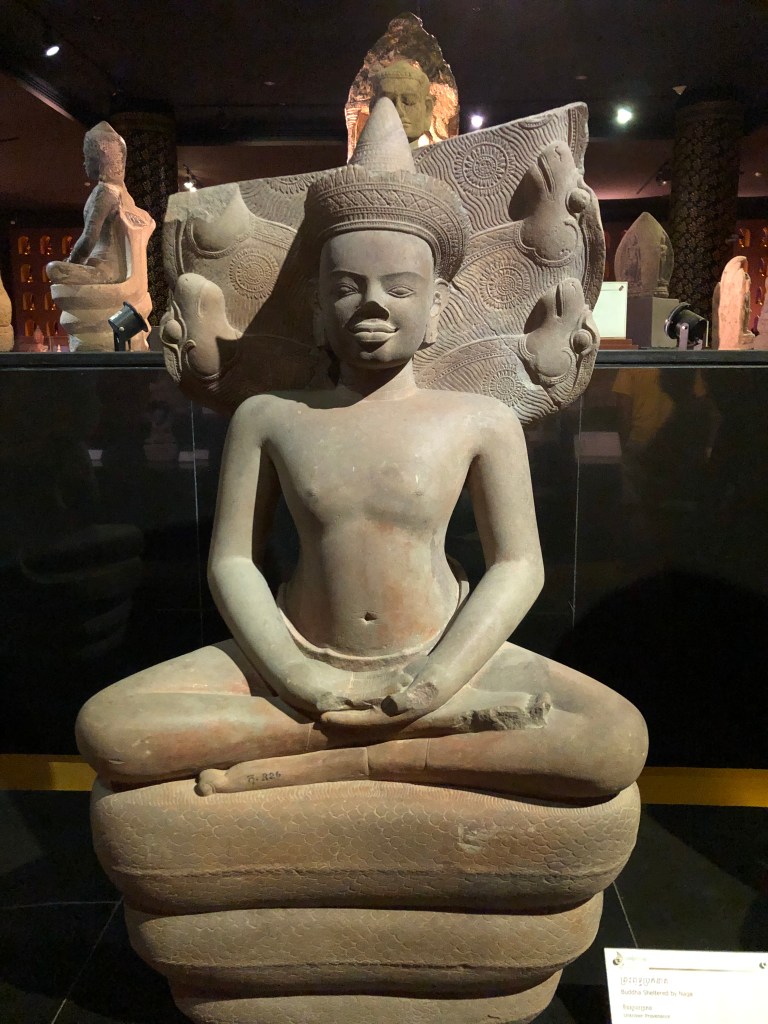
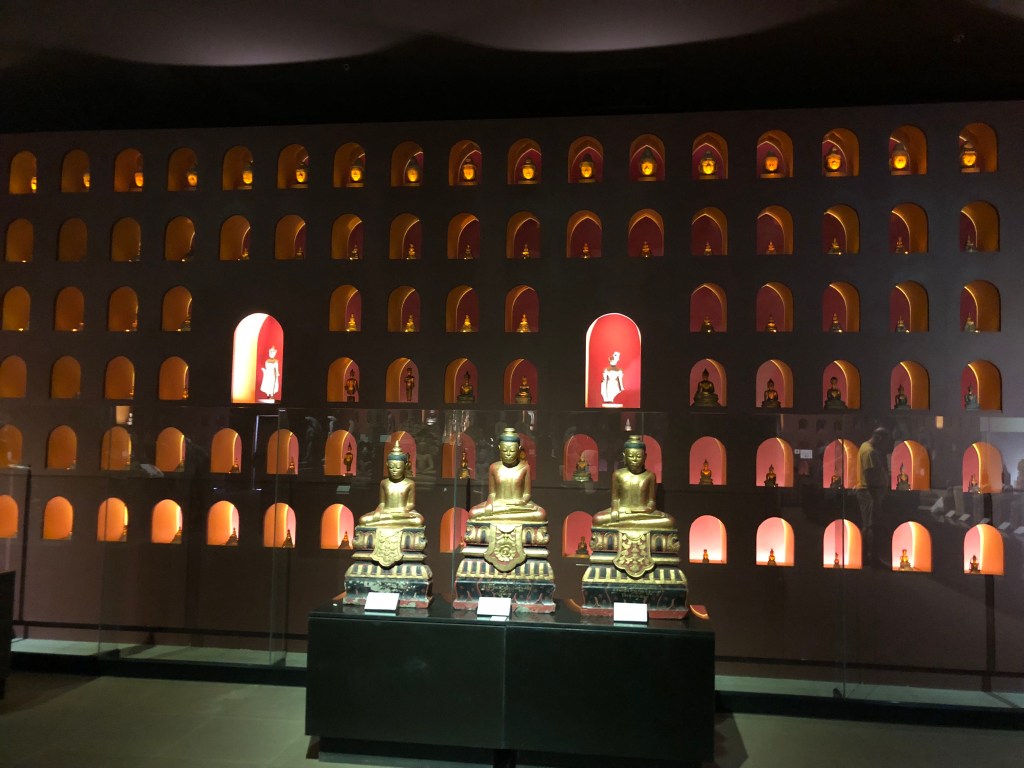
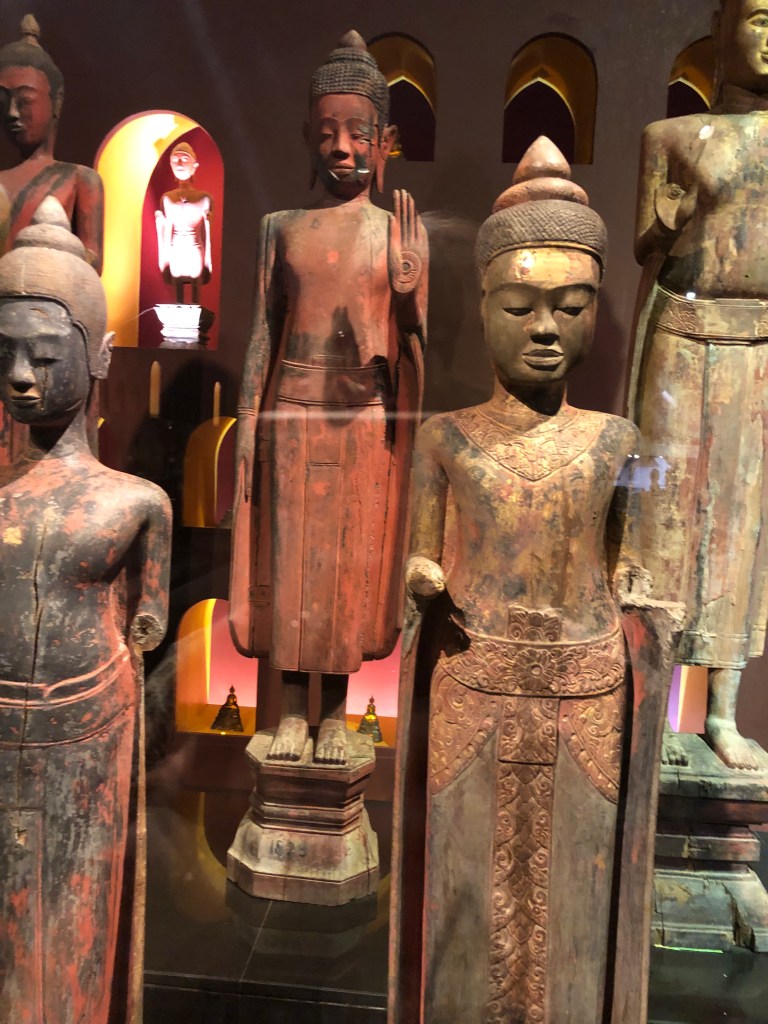
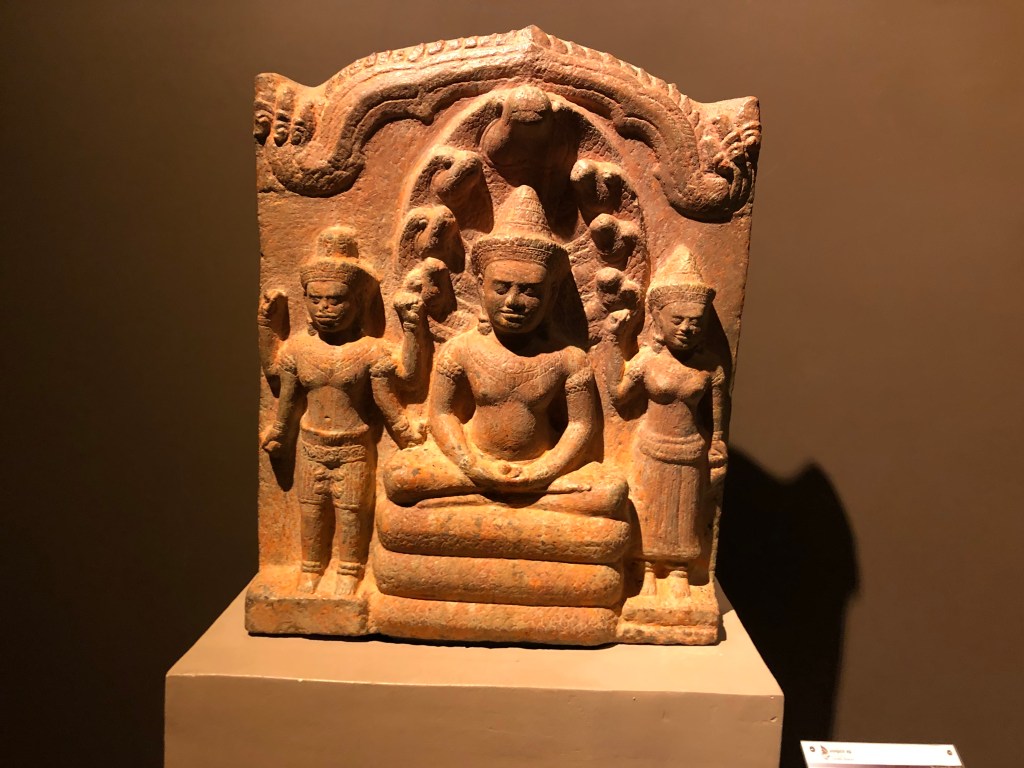
The Gallery of 1,000 Buddha Images reflects the past and present of Cambodia starting in the 12th century and provided Buddha stories and statues of every sort.
Many stone Buddhas from 9th to 13th centuryOne of three walls filled with small BuddhasWooden Buddhas for 15th century
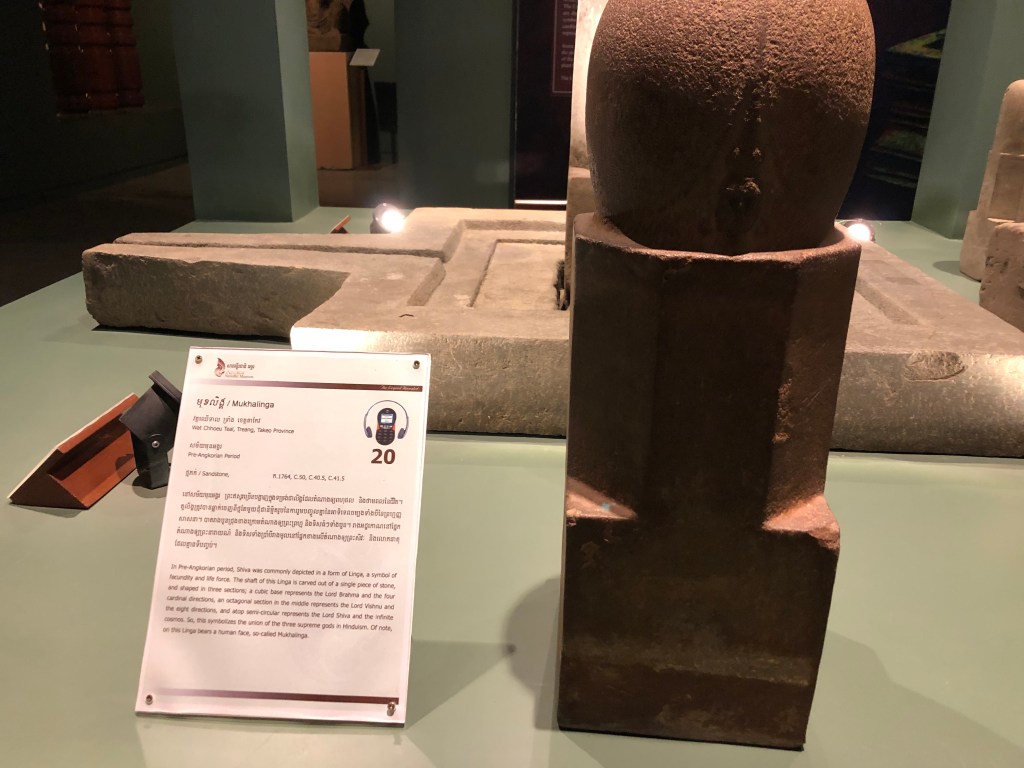
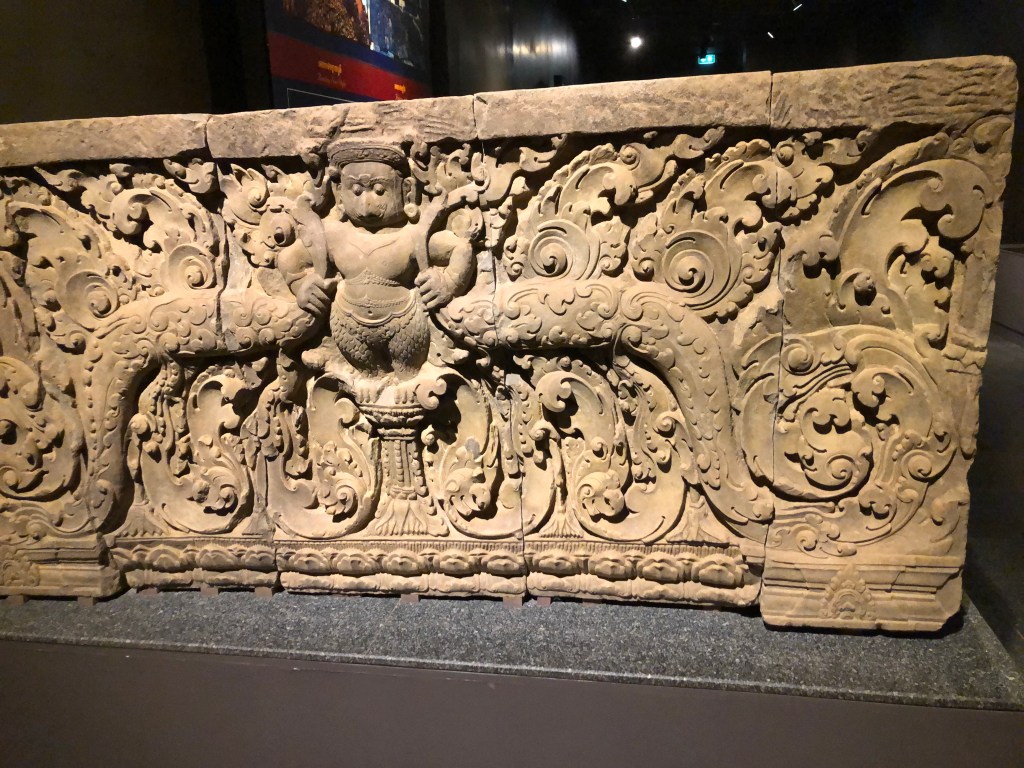
Other galleries focused on the history of the Khmer Civilization, their beliefs through history and the great Khmer Kings of the 9th through 14th centuries. Besides statues there were movies and maps – very well done I thought.
Stone represents the three forms of the main Hindu godsOlder LintelNewer more elaborate
Other than that we swam, walked a bit, ate in the cool area called Pub Street and prepared for our departure.
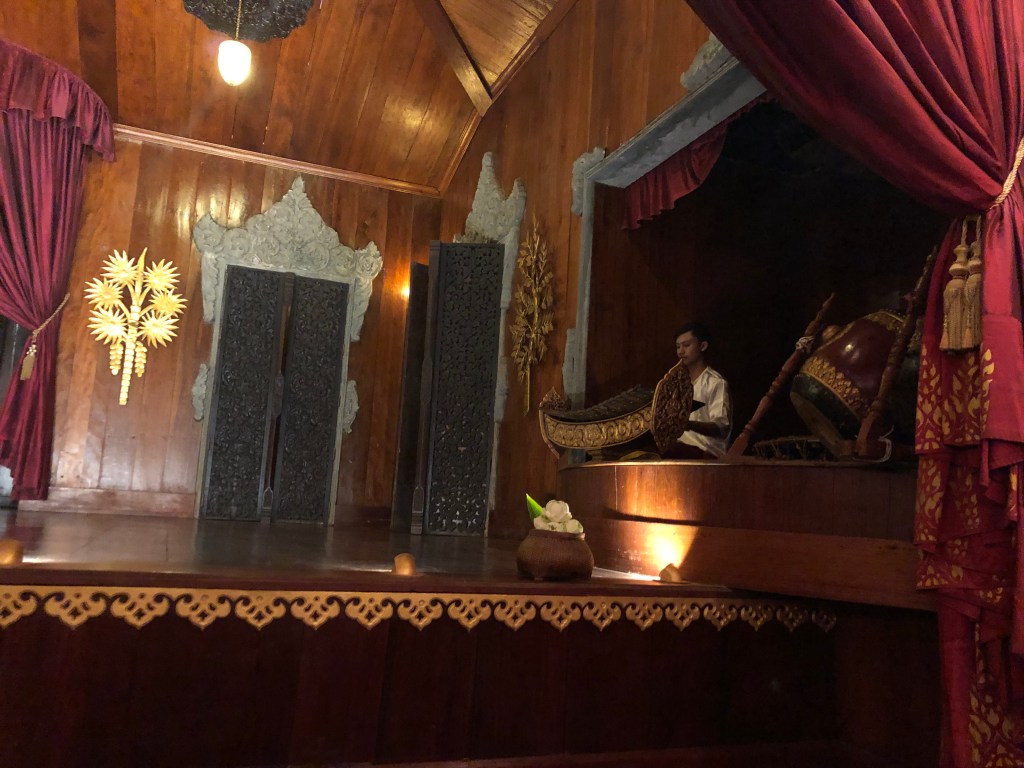
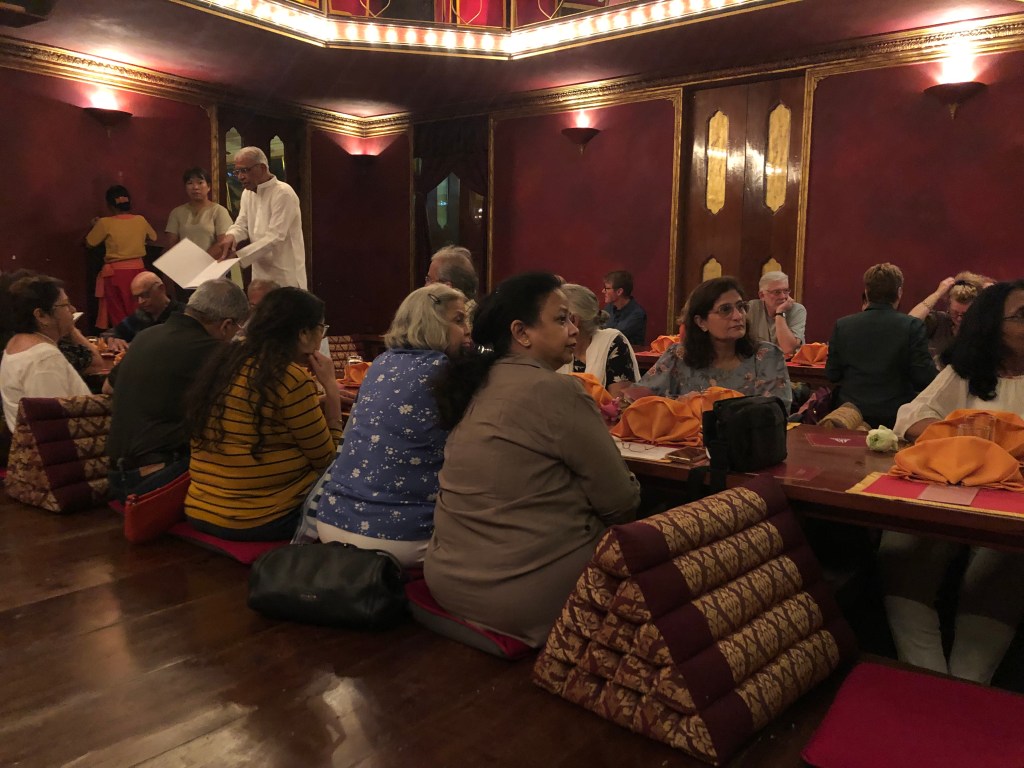
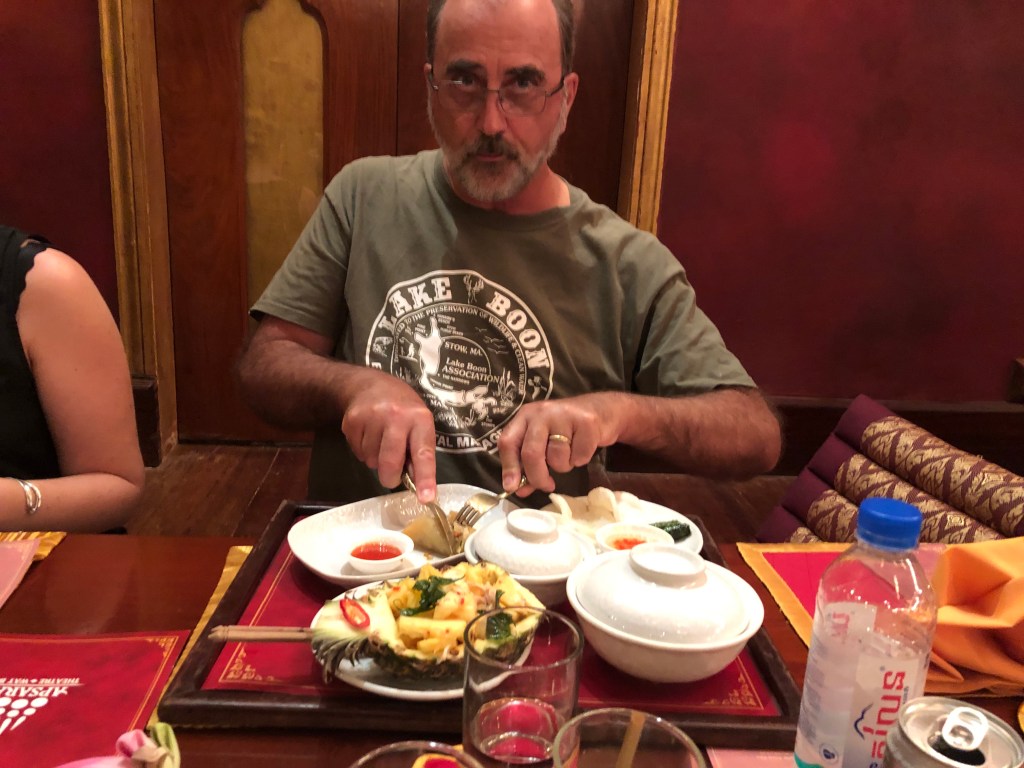
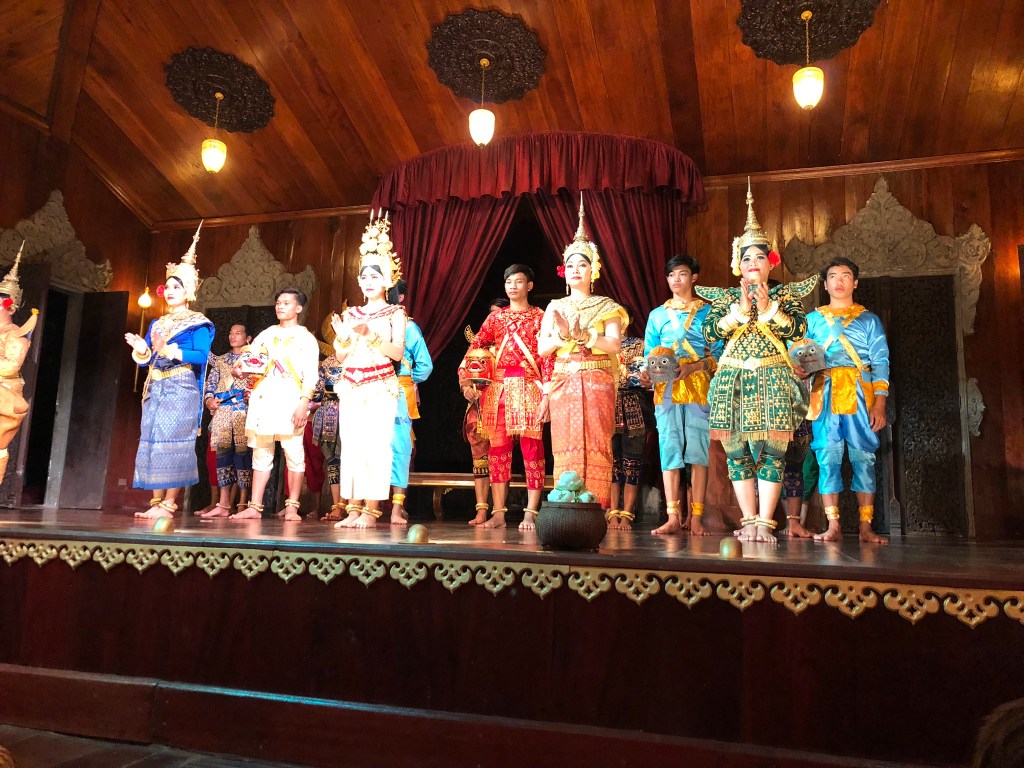
For a treat and cultural experience we decided to go to the Apsara Dance and Dinner Theater I had seen mentioned a few times. We arrived early and noticed that the seating was on the floor – didn’t look very comfortable, but it turned out there was a hole under the long tables for our feet. No problem. While a standard Khmer Cambodian dinner was served (I called ahead for us) a traditional wood xylophone was played – interesting and maybe we were a little too close to it. 🙂
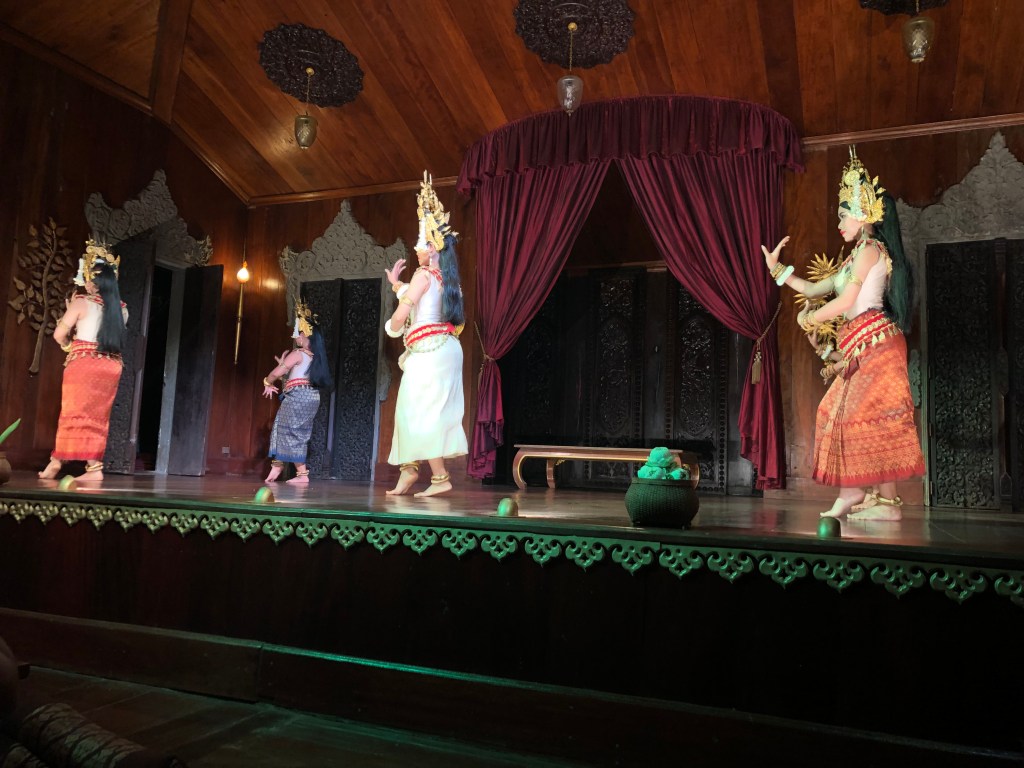
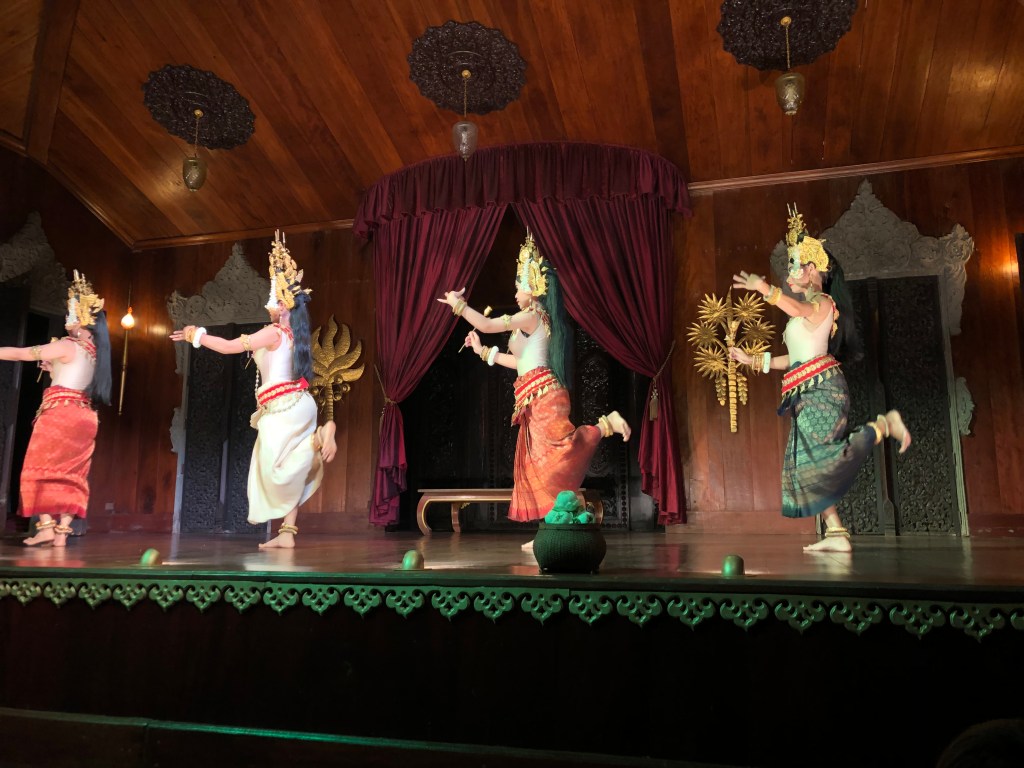
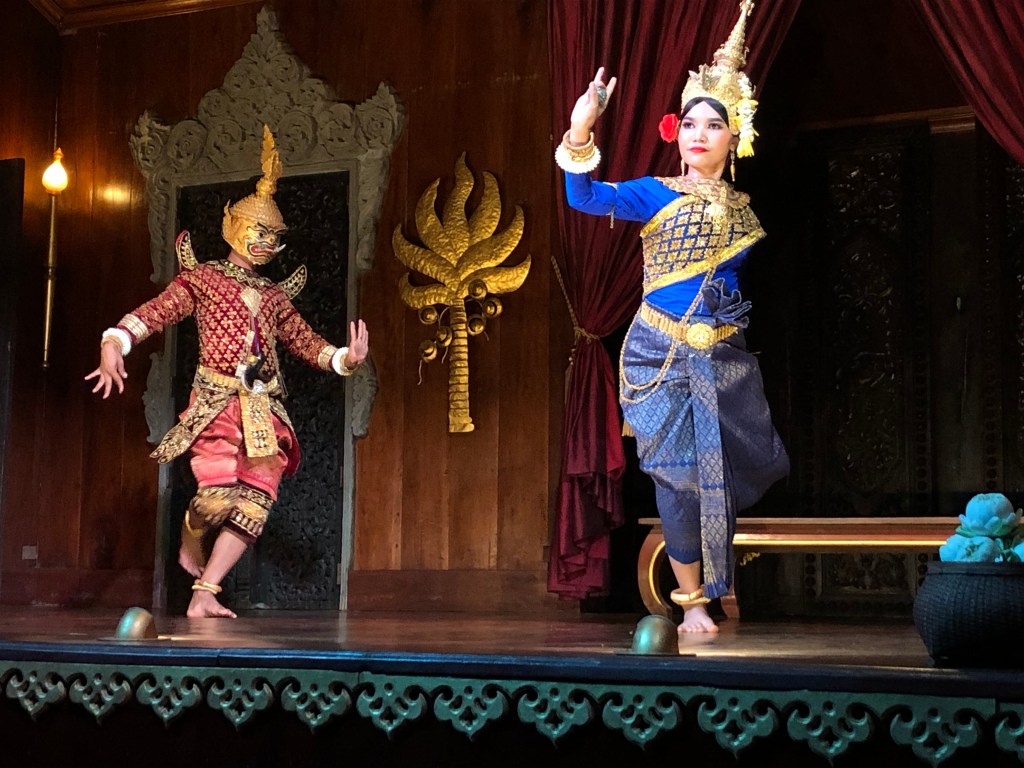
When most people had finished the traditional Khmer dance performances began. There was more than an hour of dance that conveyed stories of the past. The music was traditional as well and at first was atonal to my ears but by the end it was part and parcel of the dance and my ears had adjusted. The costumes and dance were excellent and we enjoyed it quite a lot.
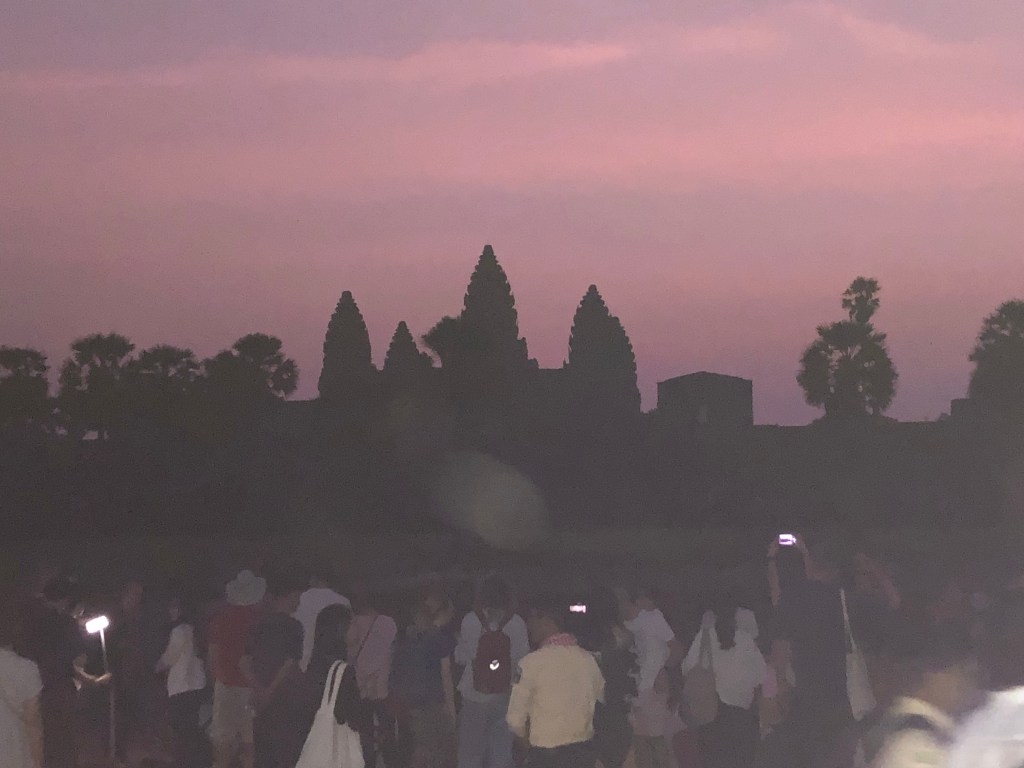
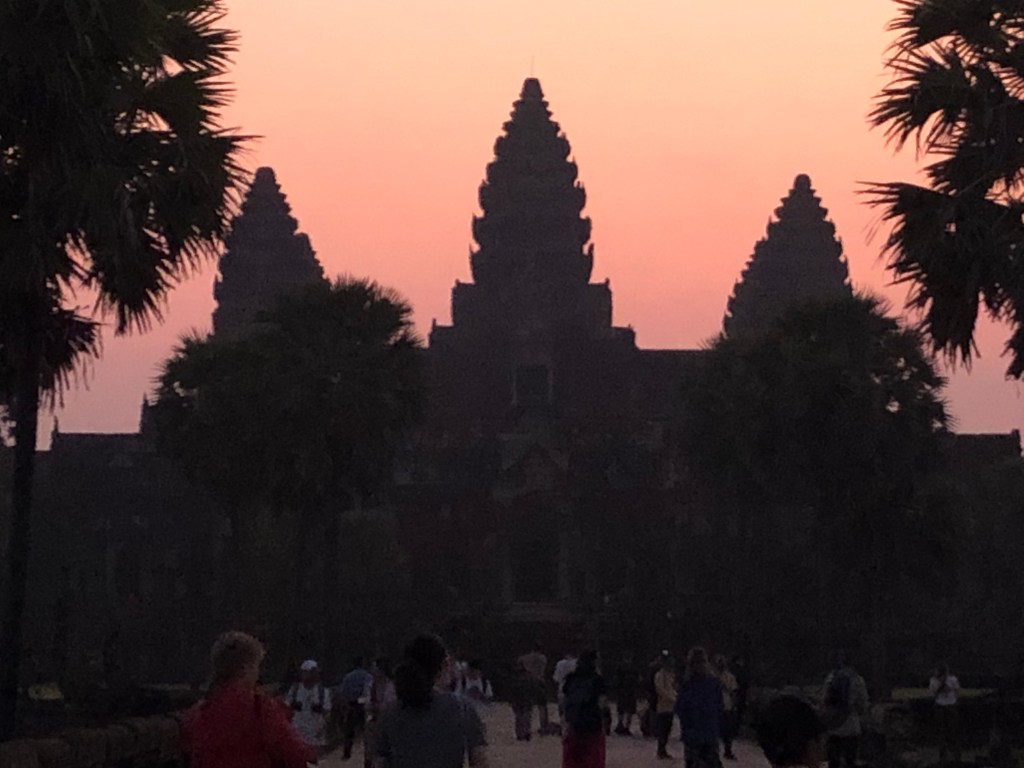
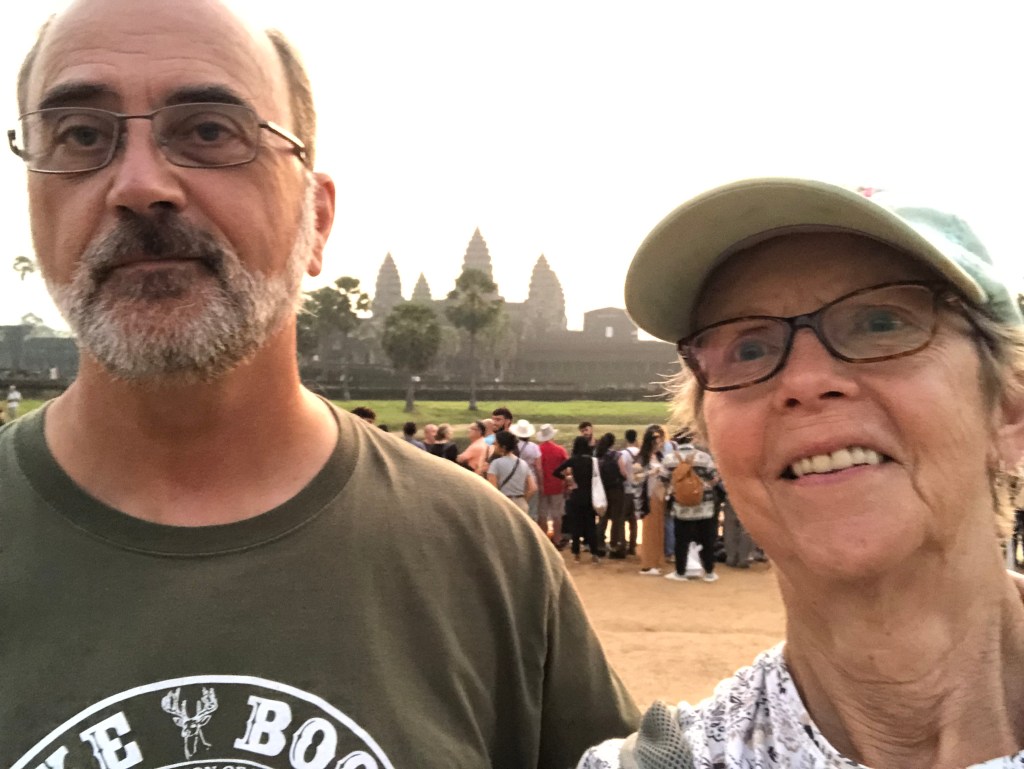
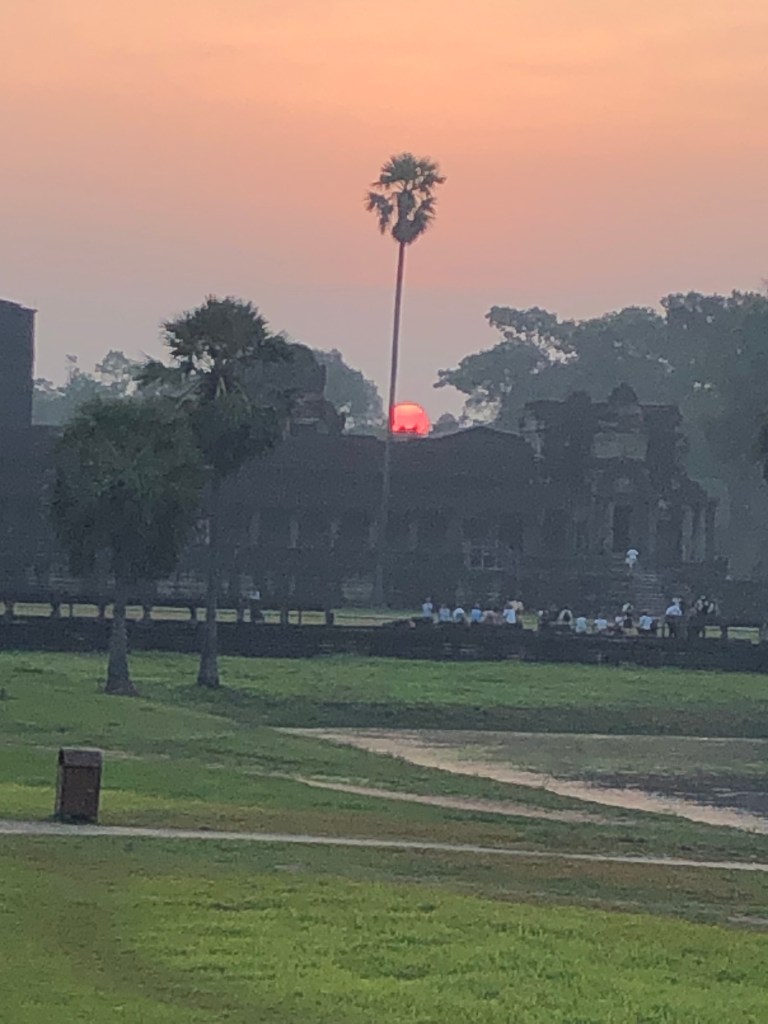
Since the Angkor Wat temple complex is very significant in Cambodia – it’s on their flag – it is also a local traditional to see the sunrise over Angkor Wat (at least for us tourists). So we did it – got up around 5:30am to get a tuk-tuk to be at Angkor Wat by 6am. Not only was the sunrise nice but the experience of seeing people from so many countries in one place, enjoying the experience their own way was pretty great.
After breakfast and spending a few hours setting up our next destination, including a trip to a tour office, I set out in the afternoon heat to explore a few more temples (Dirk stayed at the hotel – too hot!).
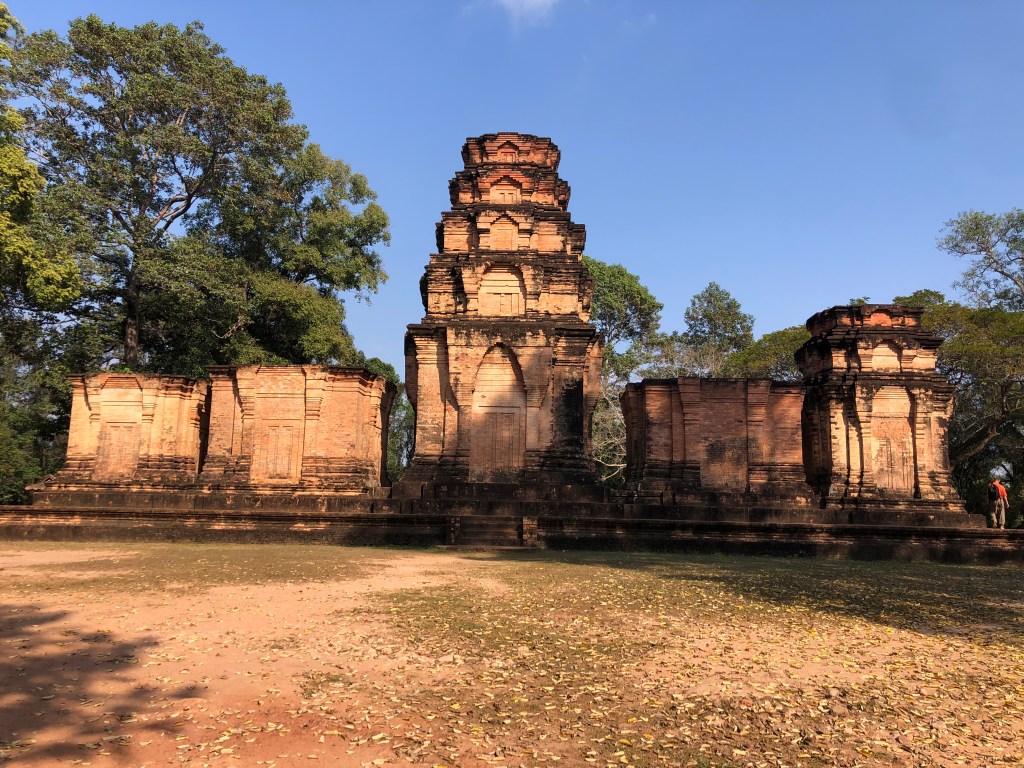
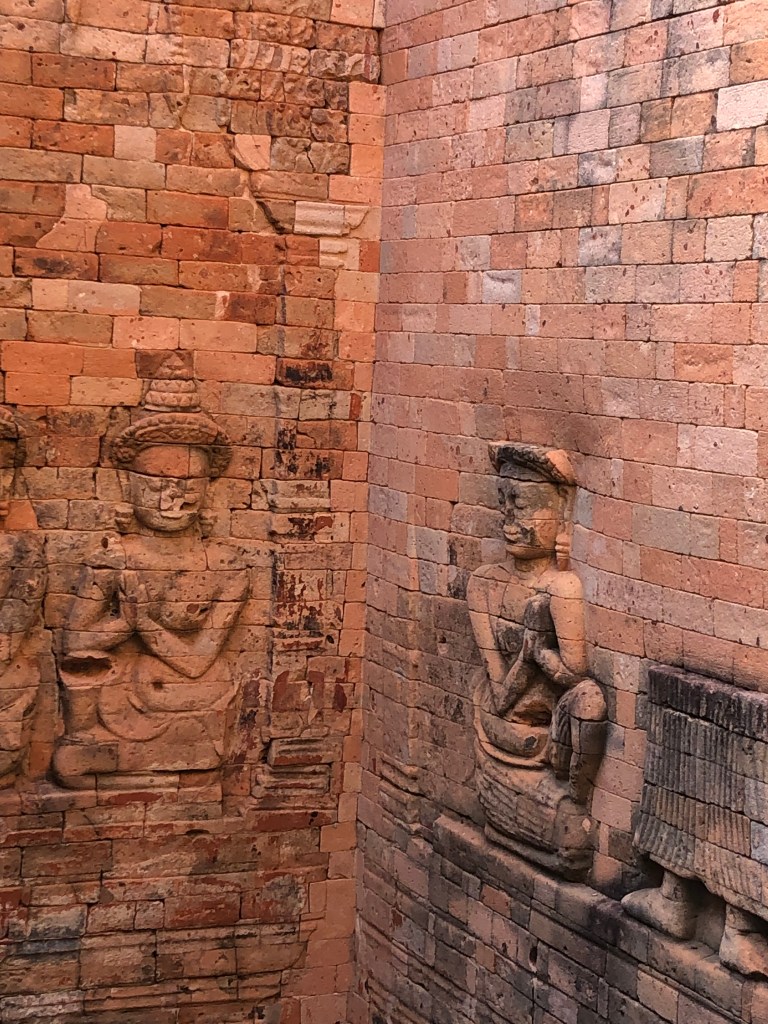
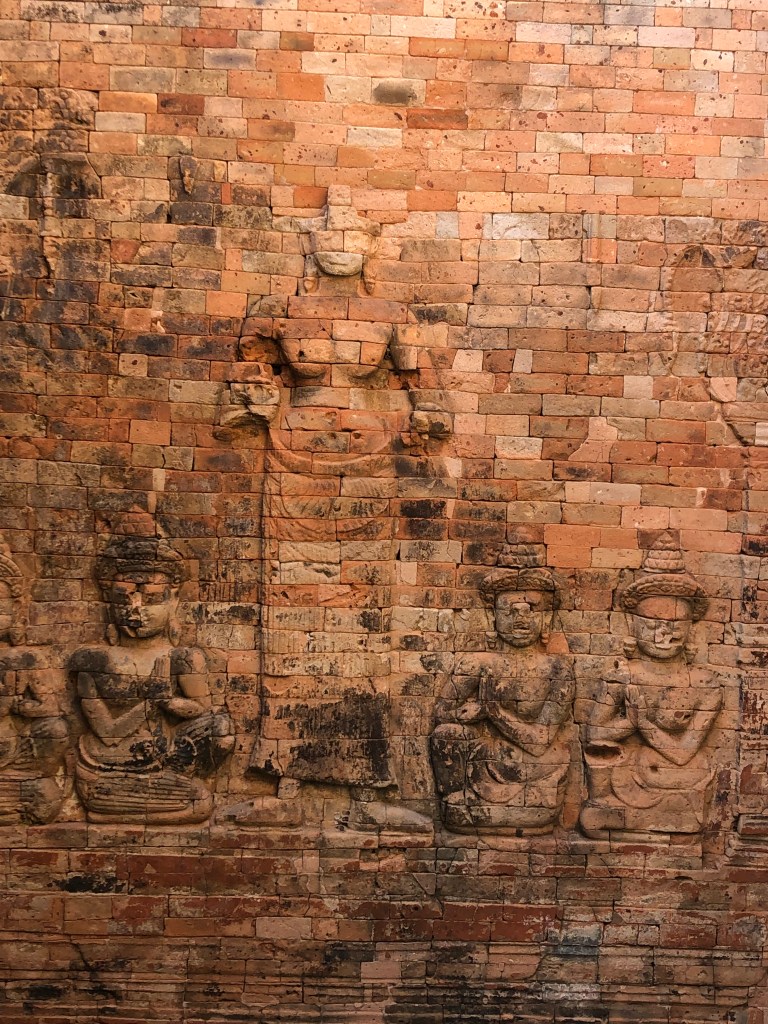
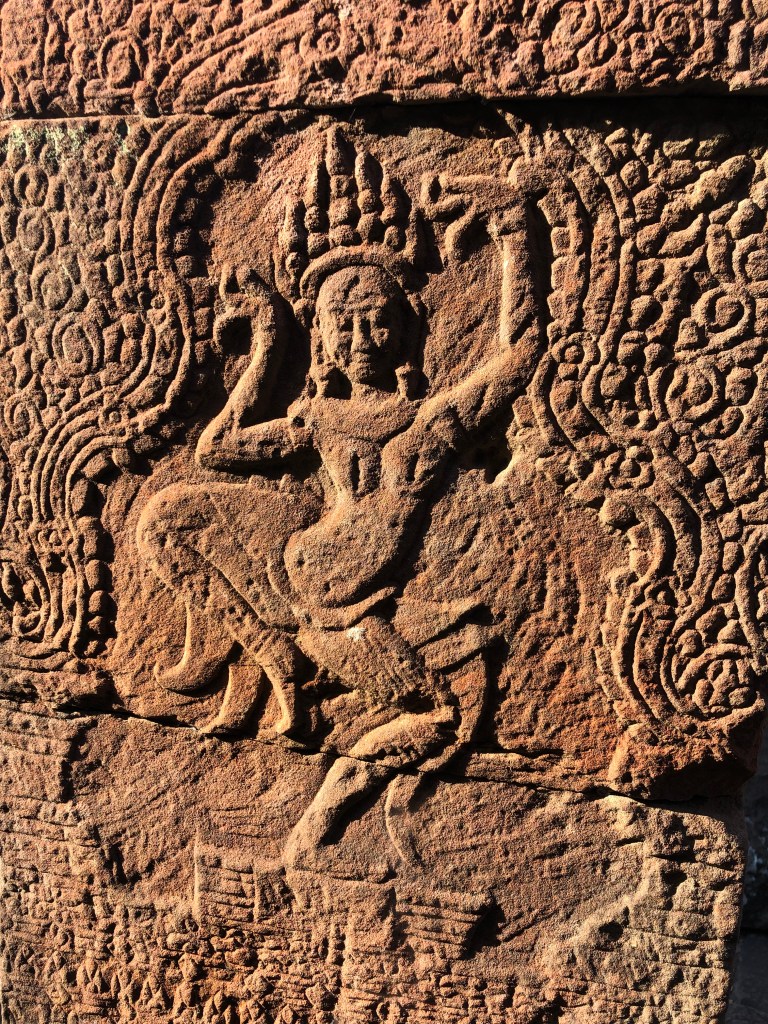
I wanted to see a 9th century, red sandstone temple, Prasat Kravan, only about 8 miles away so negotiated with our local tuk-tuk driver and off I went. It was unusual in that there was just one building with towers so only took a few minutes to explore. The bas-relief was different – it was built out with carved bricks!
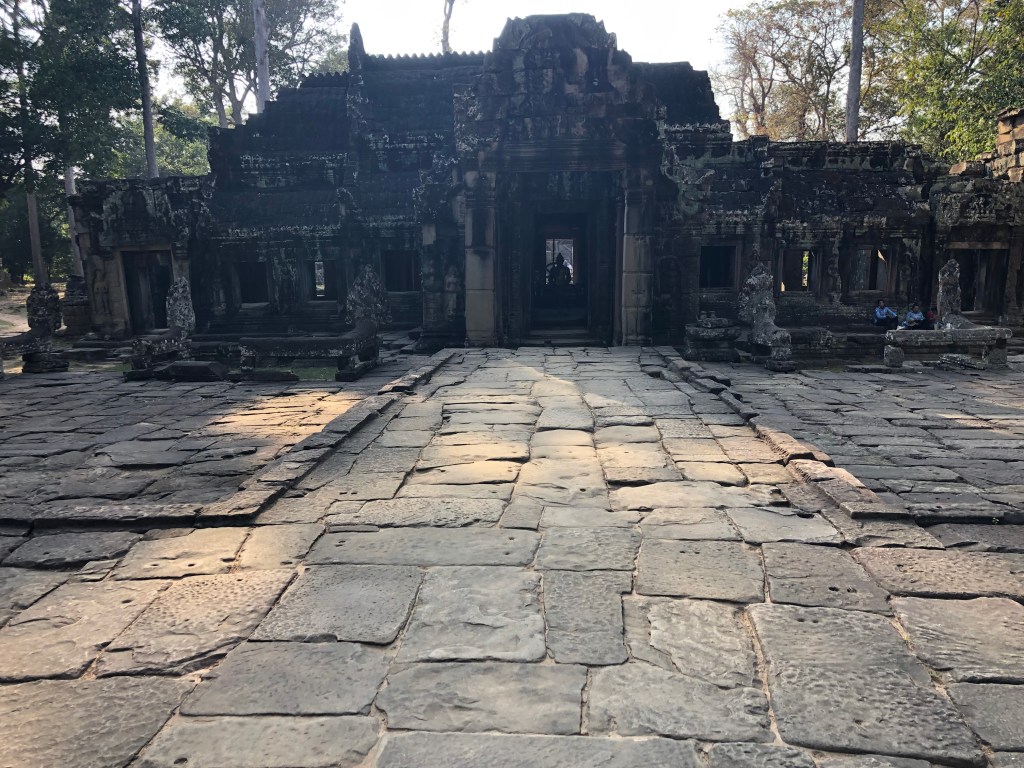
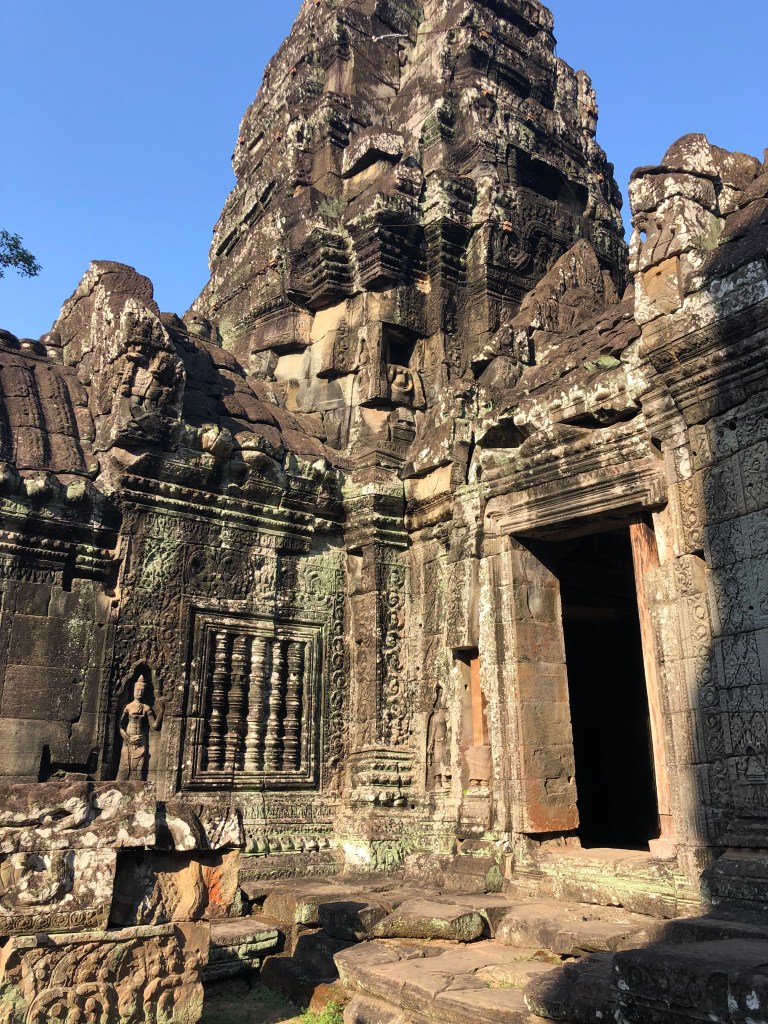
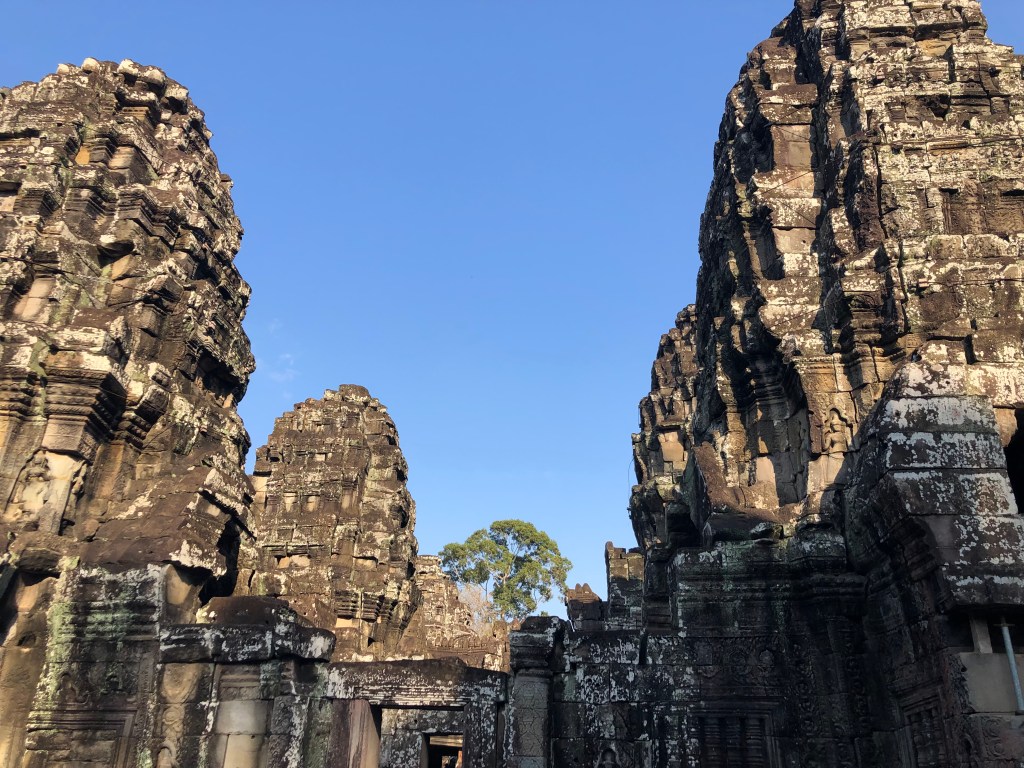
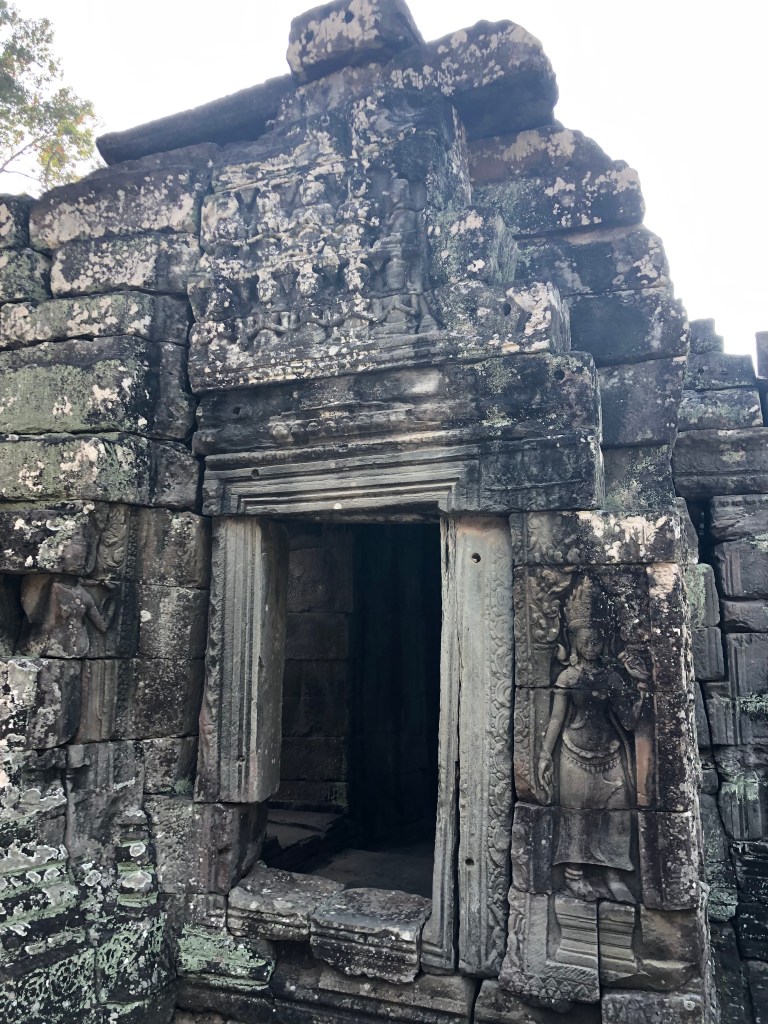
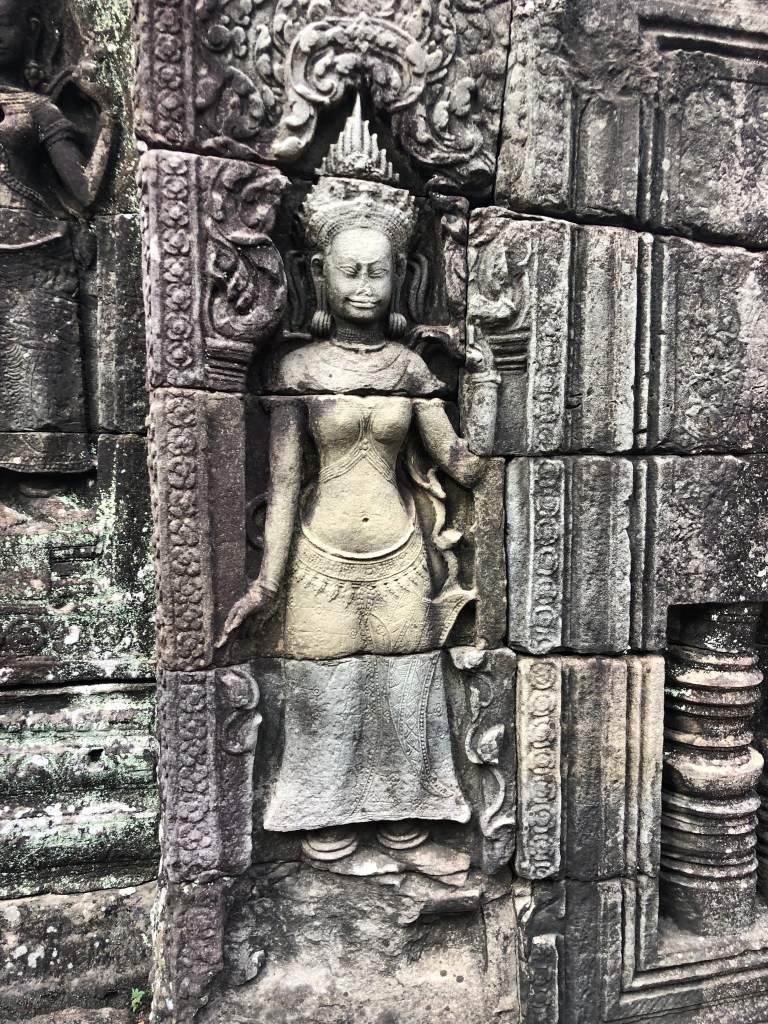
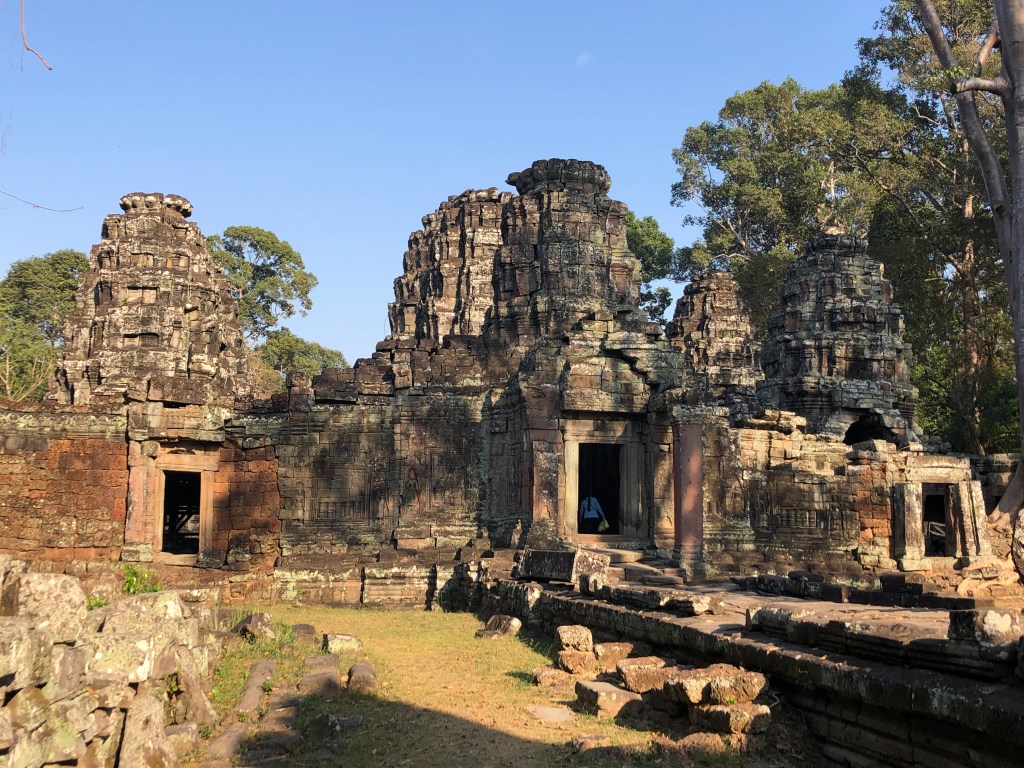
Since the site was small I searched for another nearby temple site and the driver suggested Banteay Kdei and off we went – only about 10 minutes away. This was a Buddhist temple for monks built around the same time as the Bayan temple and the front gate also has faces in the stone. However this complex is in bad shape and is undergoing restoration. There are two galleries with towers and three other buildings as well. I again enjoyed the bas-relief art as well as the woodsy area with a stream below.
Entrance – with huge stones, as seen in all these temple complexes and citiesSome of the 6-8 towers – in risk of fallingBack of the complex
I was quite warm when I returned to the hotel and quickly went to the pool. Then rested and went out for a special treat later… see part 2 of Feb 11.
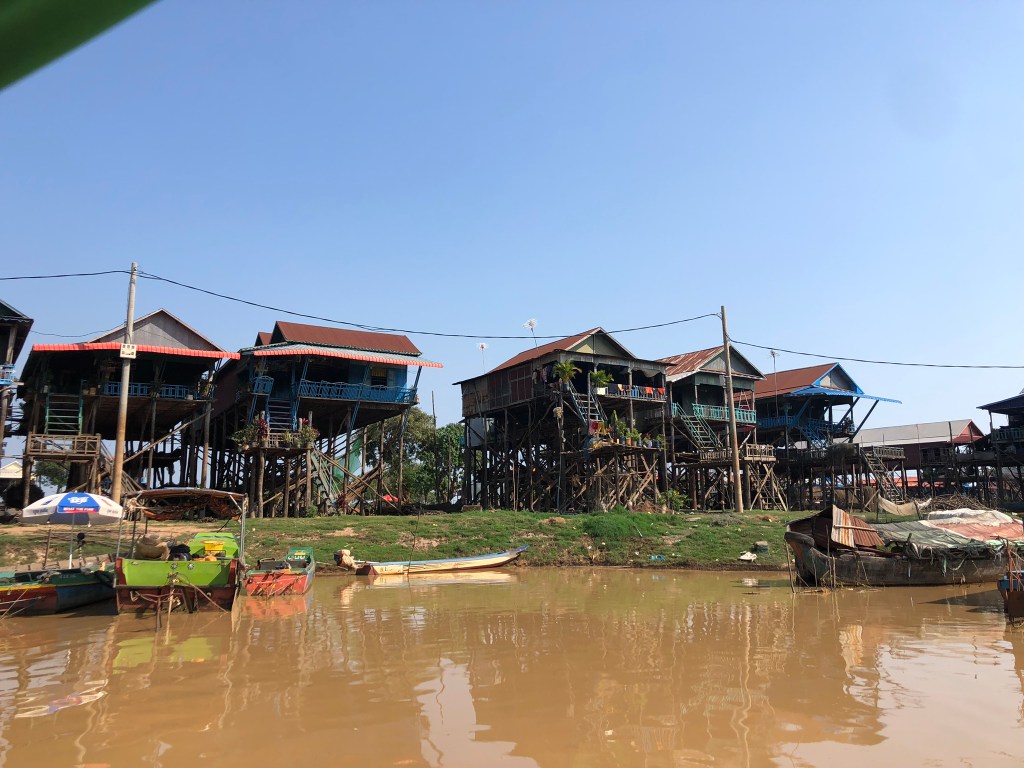
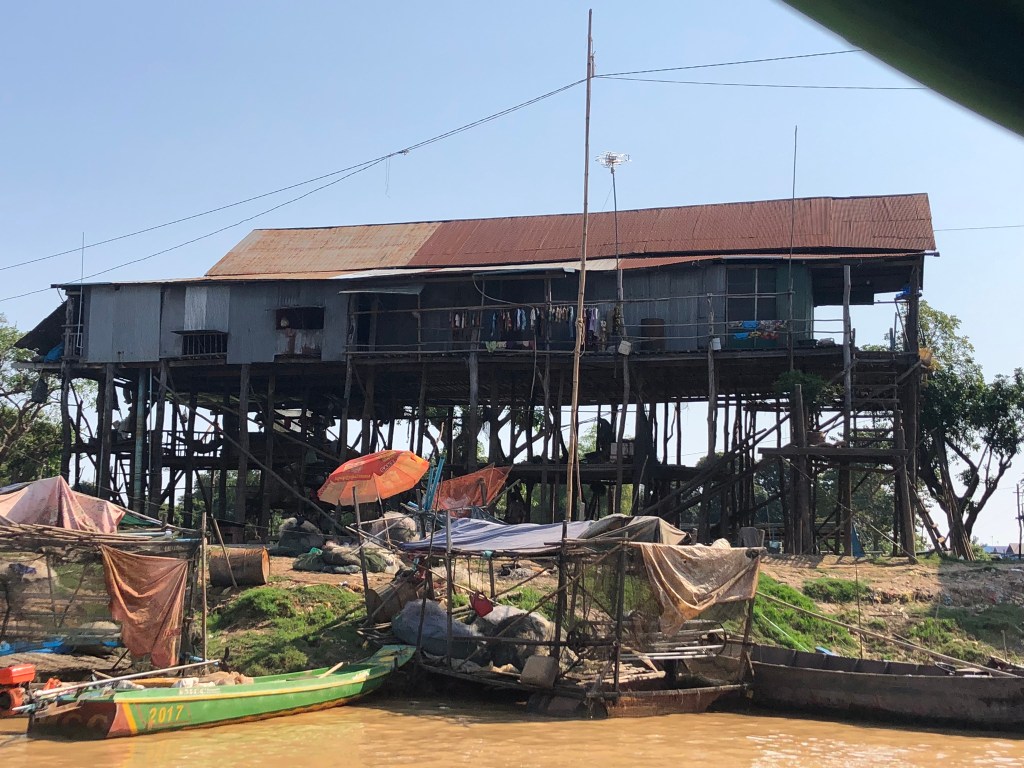
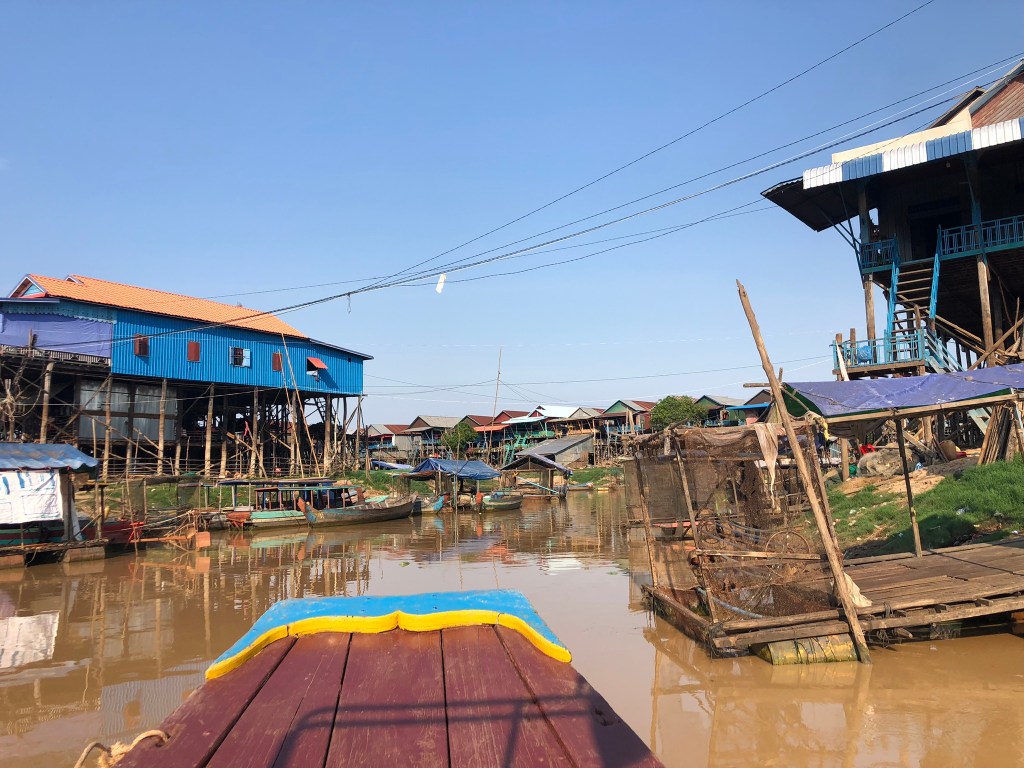
On Friday our guide Kim took us to the Kampong Khleang Stilt Community that is based along side of the very large Tonte Sap Lake about an hour from Siem Reap.
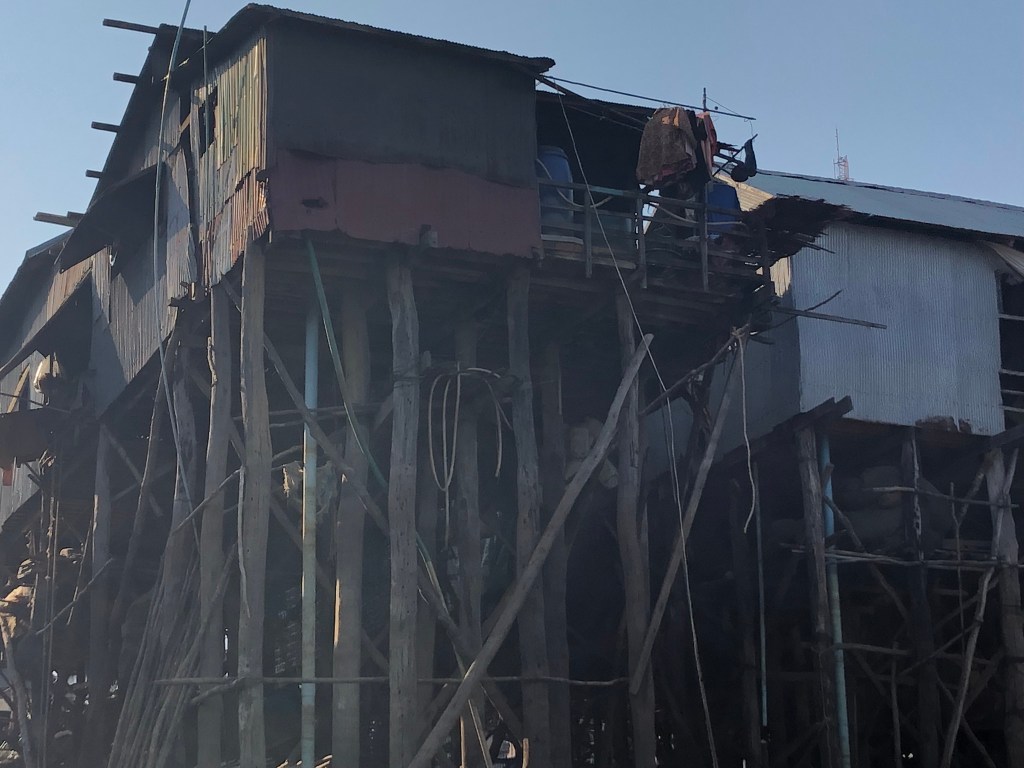
The homes in this unique community are all built on very high stilts due to the monsoon flooding that occurs every year. They are unable to use local roads, child are boated to schools and generations have learned to live with the flooding of their village. Houses are large and multiple generations will live in one home. Fishing is their main industry and it was fascinating to watch some of them empty their nets after a day of fishing.
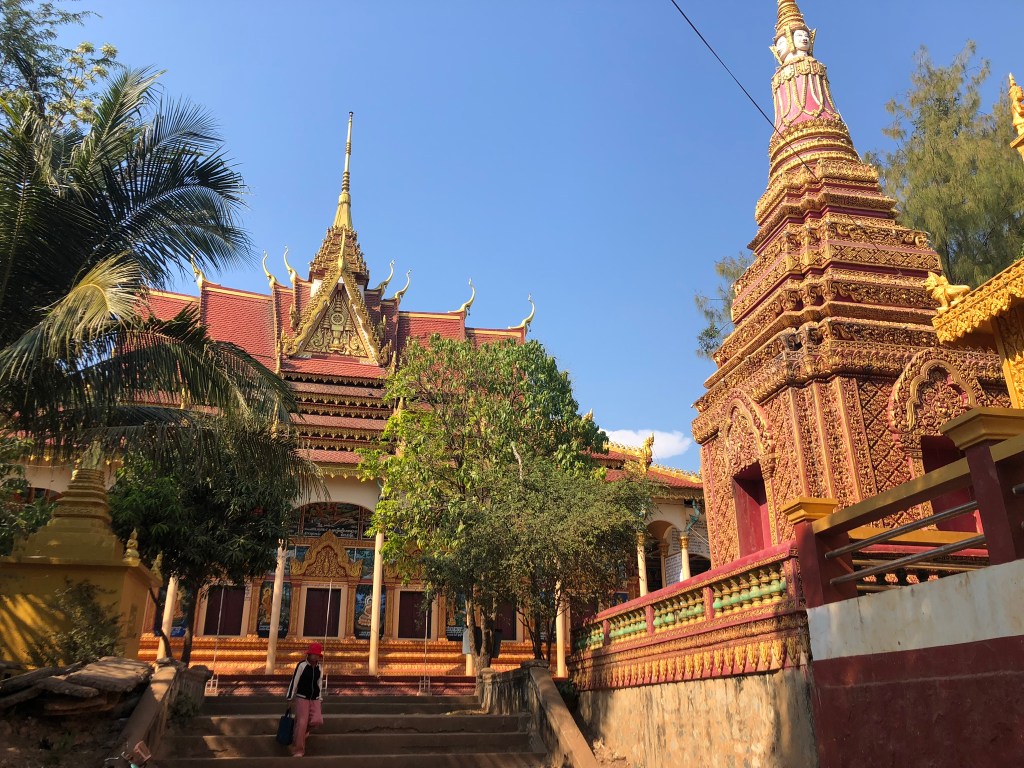
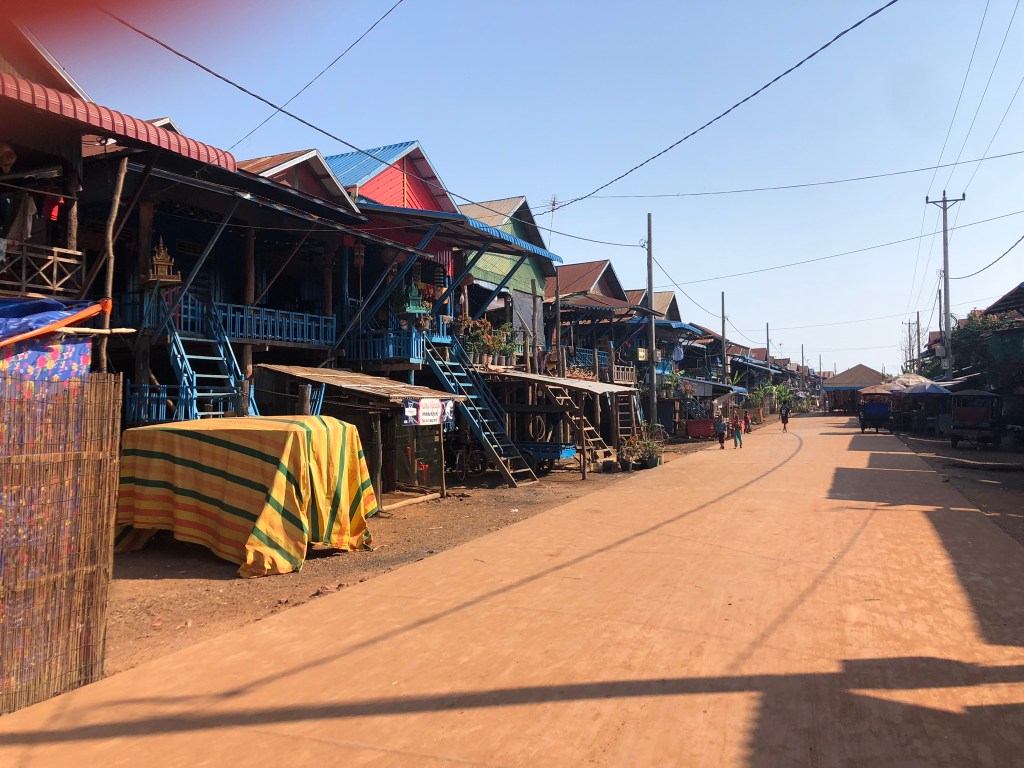
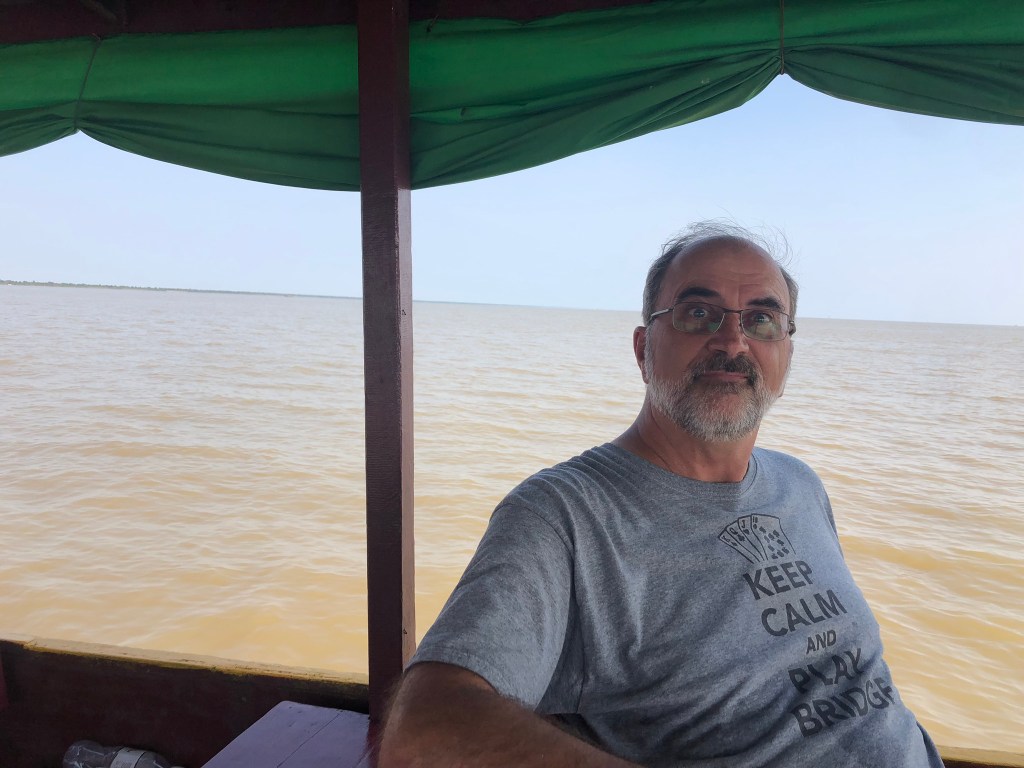
Our tour included a long, leisurely boat ride along their home river, viewing the maybe a hundred stilt houses, walking around the main village that does have a street and a temple, and then going out into the huge lake where we couldn’t see some of the far shores. For the tourist industry that comes to see the village, floating restaurants have been built on the lake to add to the “experience”.
Fish net device that releases caught fishTemple in townOnly street for 1,000 peopleOne of 3 floating restaurants we saw
Today we started our tour of the temples, palaces and impressive ruins of Angkor Wat and some of the hundreds of temples built from the 9th to 15th in this area. The UNESCO World Heritage site “Angkor Archaeological Park” is the largest religious monument in the world, in an area measuring 402 acres. Within a few miles of us are 15 or so major sites (each with many multiple monuments) and a there are still few more major sites within about 35 miles.
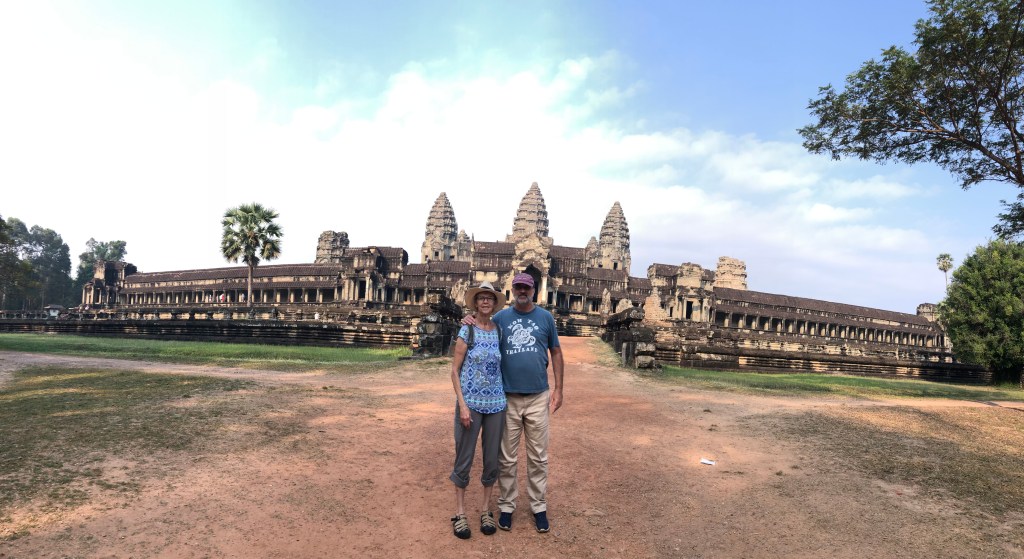
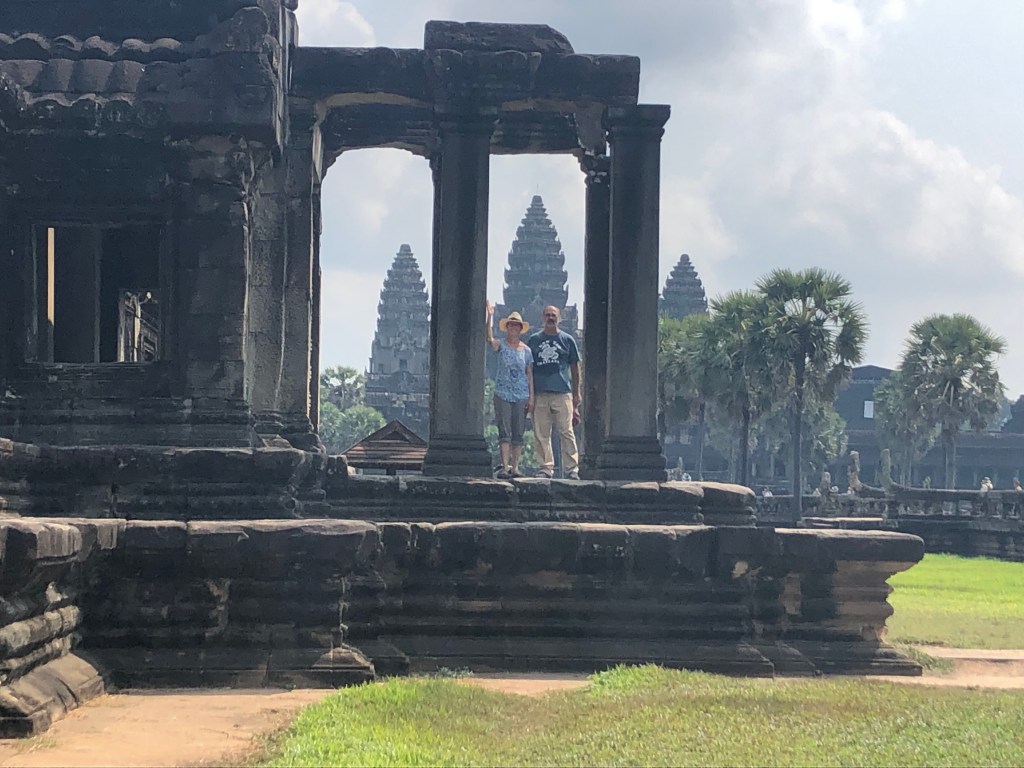
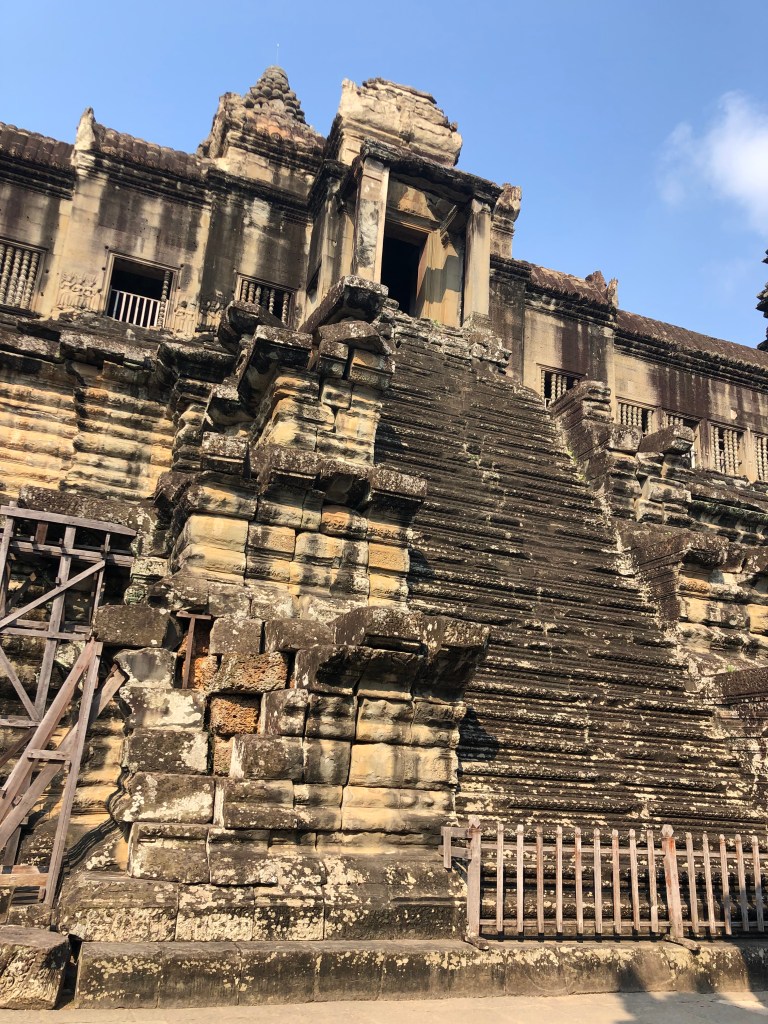
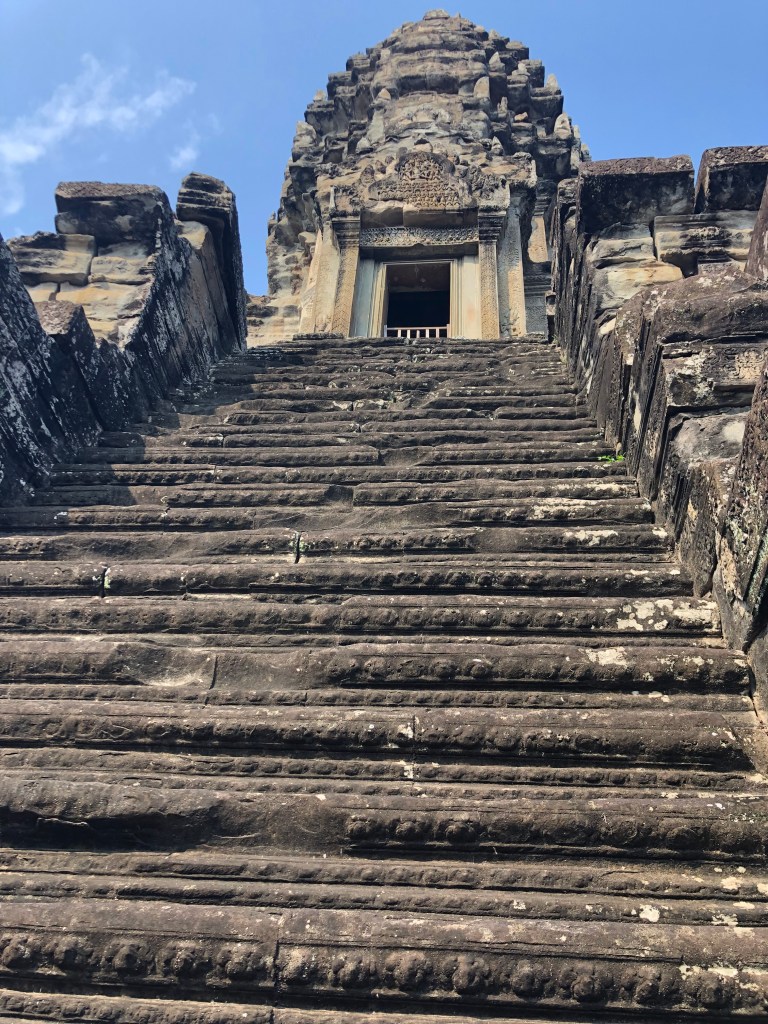
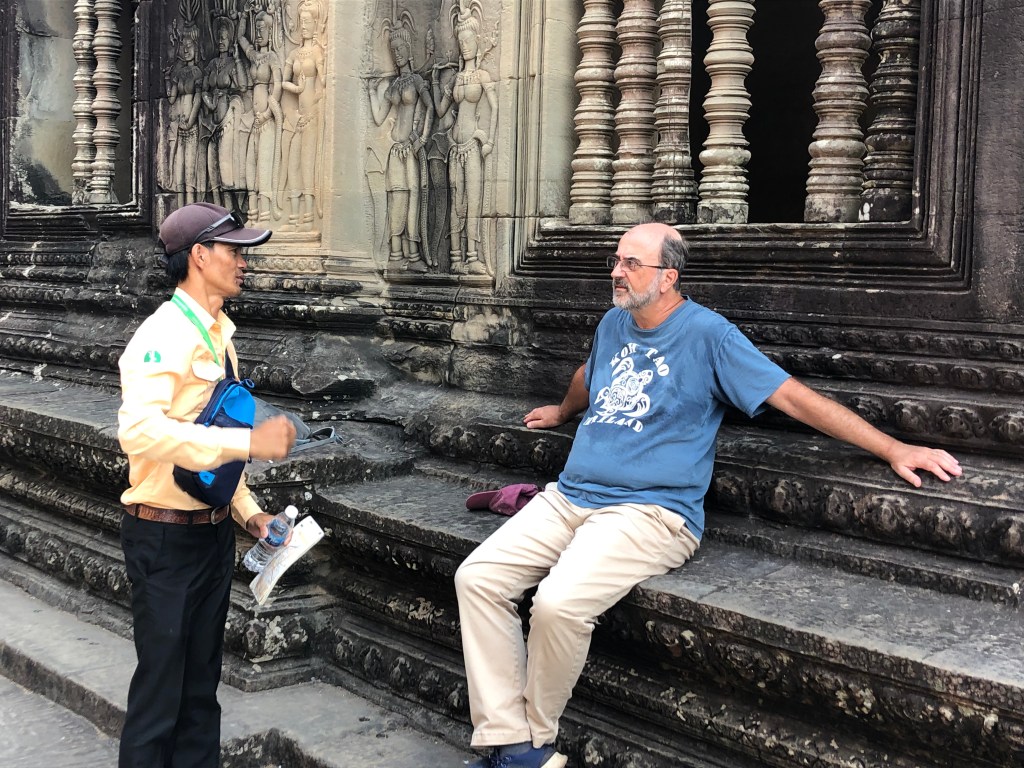
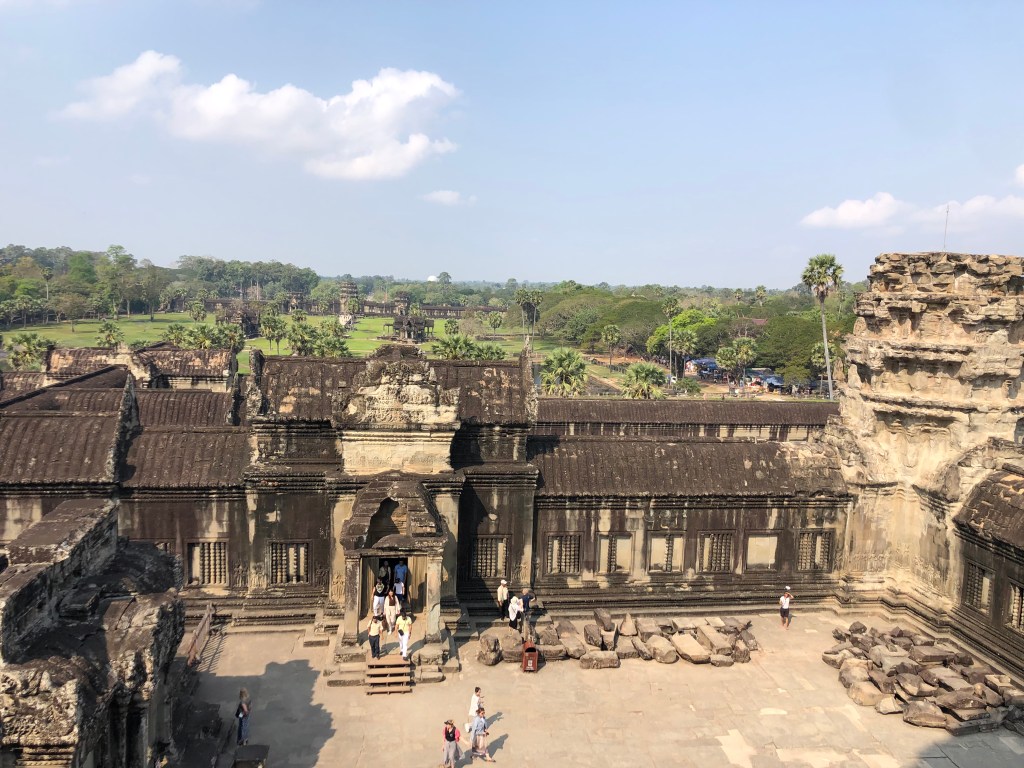
Today we first visited the Angkor Wat temple complex, the most well known of the sites and containing the largest and now intact buildings. (Much restoration has been done). For a few hours we walked through a number of buildings including climbing to the highest point (in 90+degrees!) – the bas relief art throughout the temples showed amazing appreciation of beauty.
Entering Angkor WatEnd of tour of Angkor WatPart of very large templeArtistic but difficult stairs to climbSome of hundreds of apsara dancersOur very thorough guide, Kim with DIrk Looking down from higher levels
Sidebar – Angkor Wat: Originally constructed as a Hindu temple dedicated to the god Vishnu for the Khmer Empire by King Suryavarman II during the 12th century, it was gradually transformed into a Buddhist temple towards the end of the century; as such, it is also described as a “Hindu-Buddhist” temple.
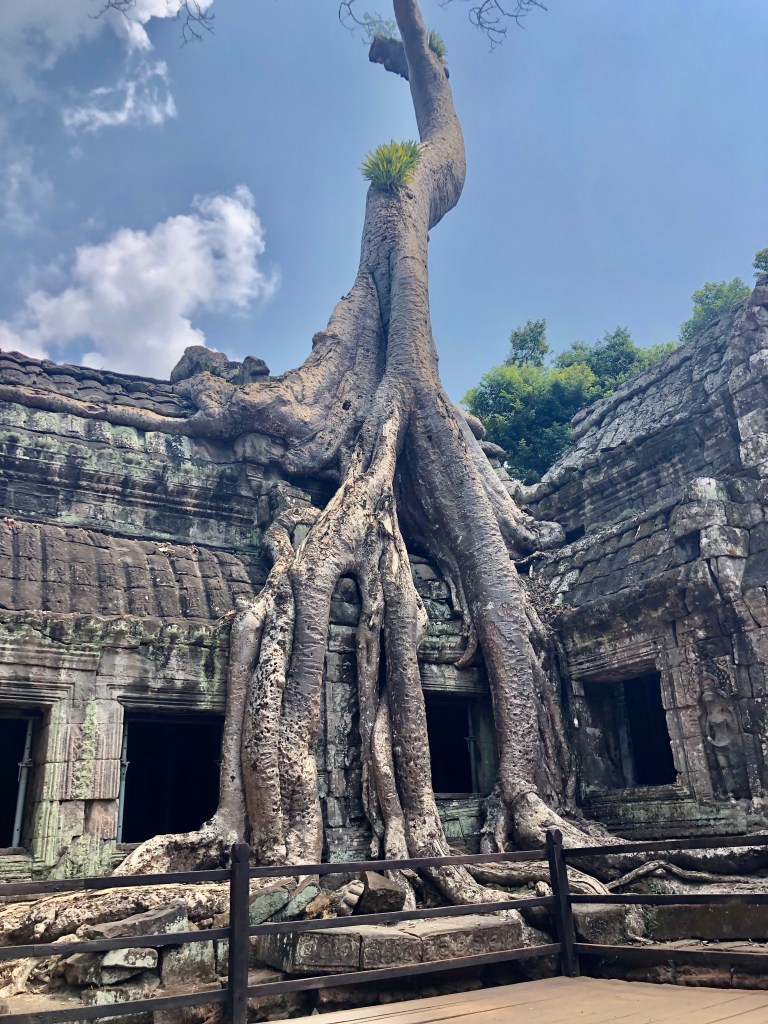
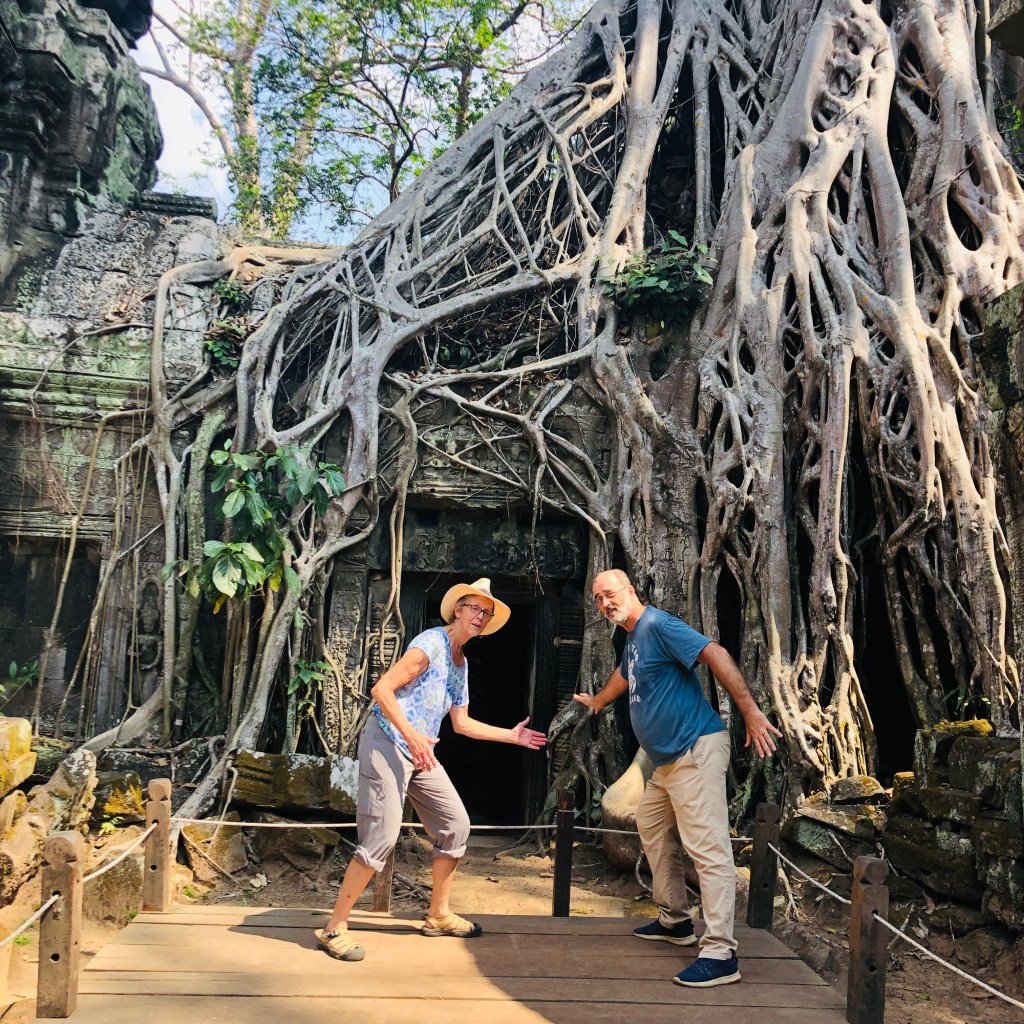
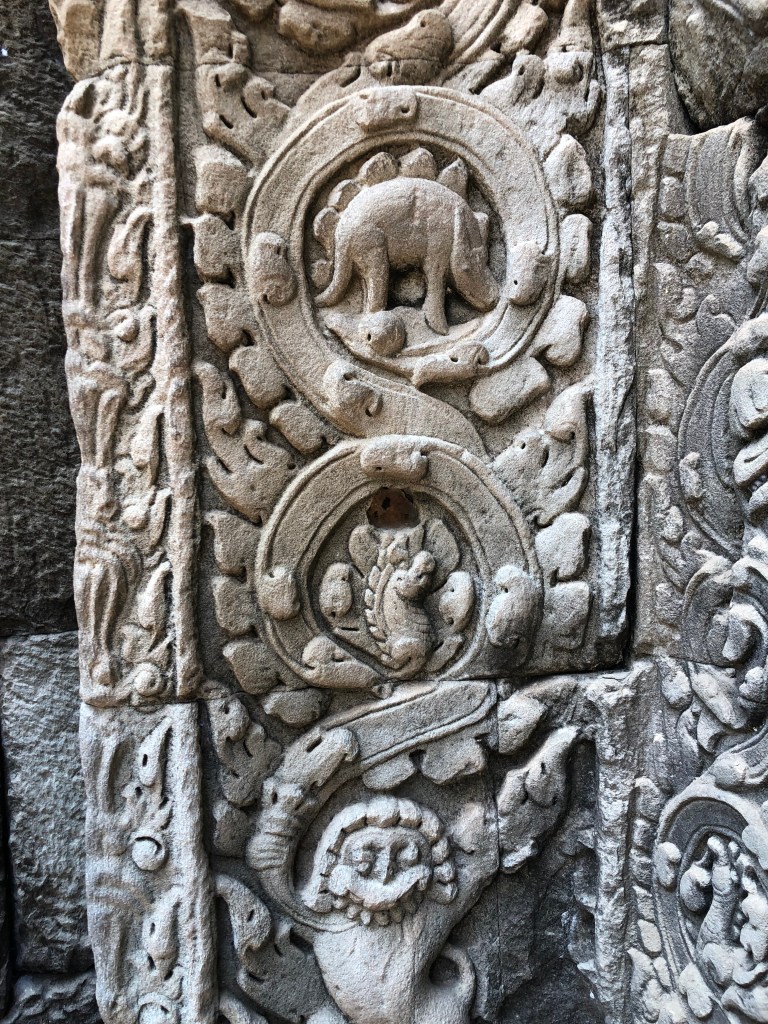
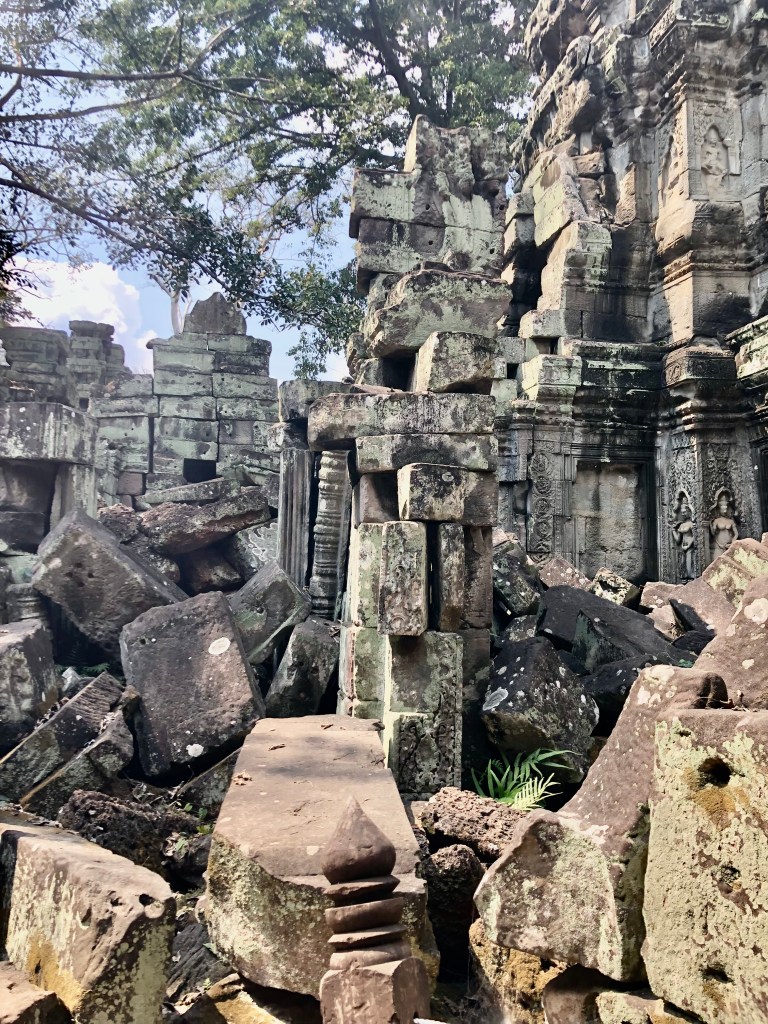
After lunch we went first to the temple Ta Praham (built in late 12th century as a Mahayana Buddhist monastery) where much restoration is still taking place in spite of the huge overgrowth of silk-cotton trees destroying many of the building that weren’t already blasted during the Khmer Rouge days (the temples were used for ammo storage). This site area was used in a Tomb Raider film and Dirk and I are in front of one our the scene’s creepy doors.
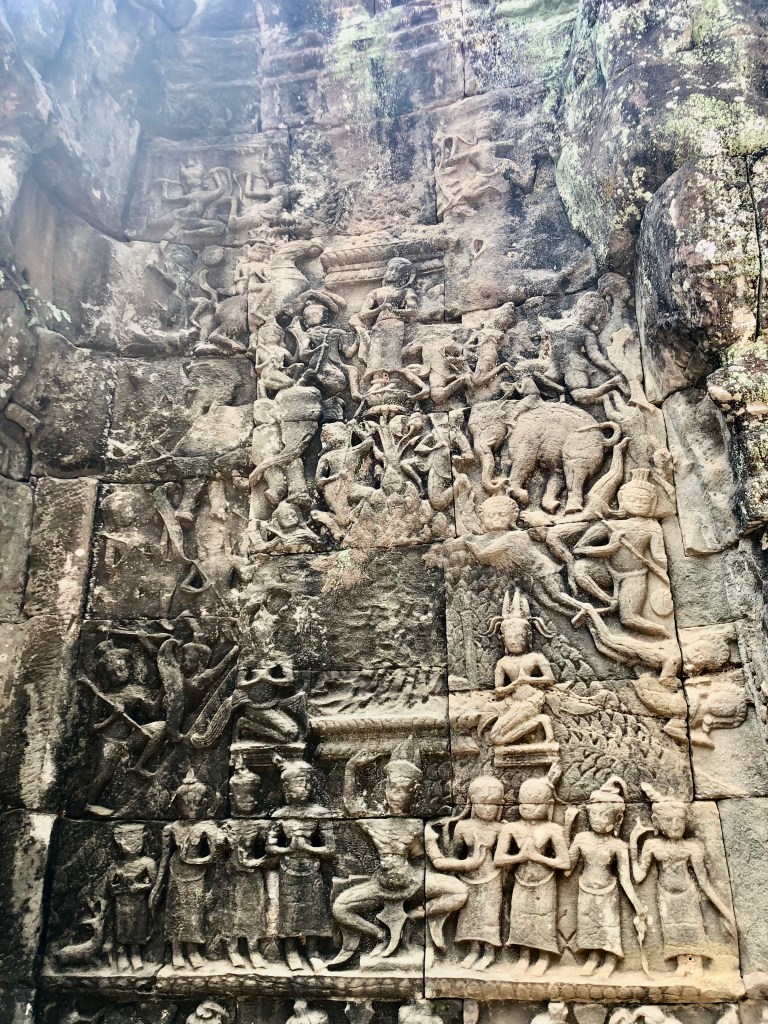
Trees overwhelming templesBas reliefTomb Raider entrance Stegosaurus in the 12th century?UInique artSome of massive fallen blocks near to Ta Prohm temples
By the way, we did this tour by tuk-tuk, the small carriage pulled by a motorcycle – this one had room for 4 people. After about an hour we headed to our next temple complex, Bayon.
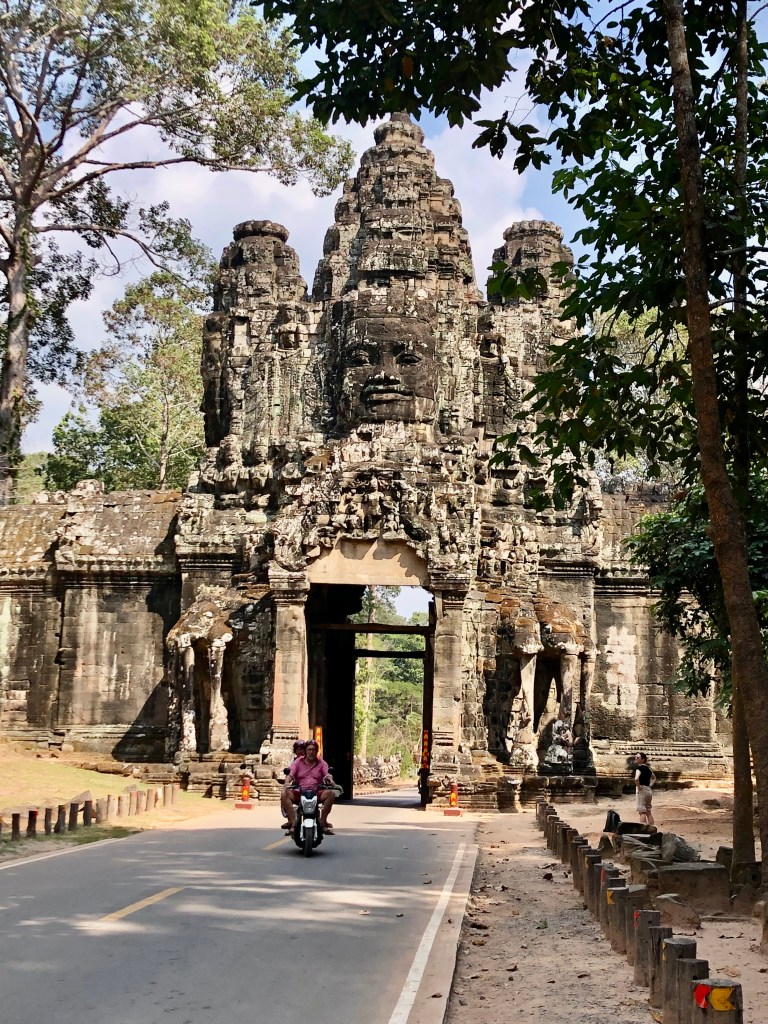
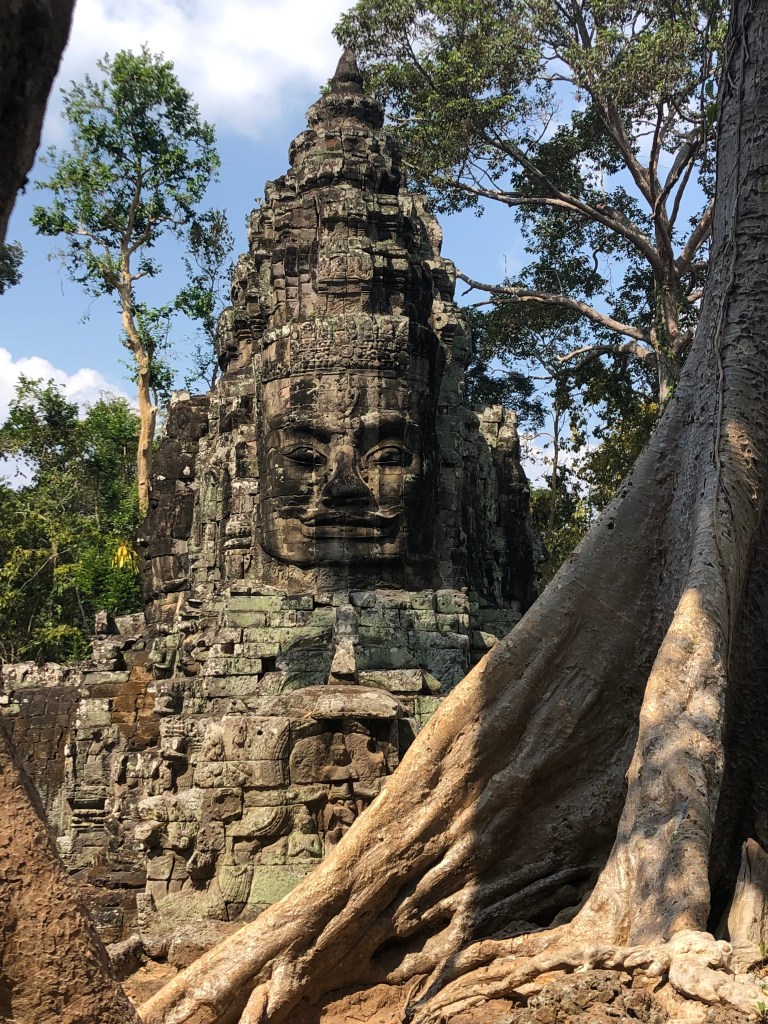
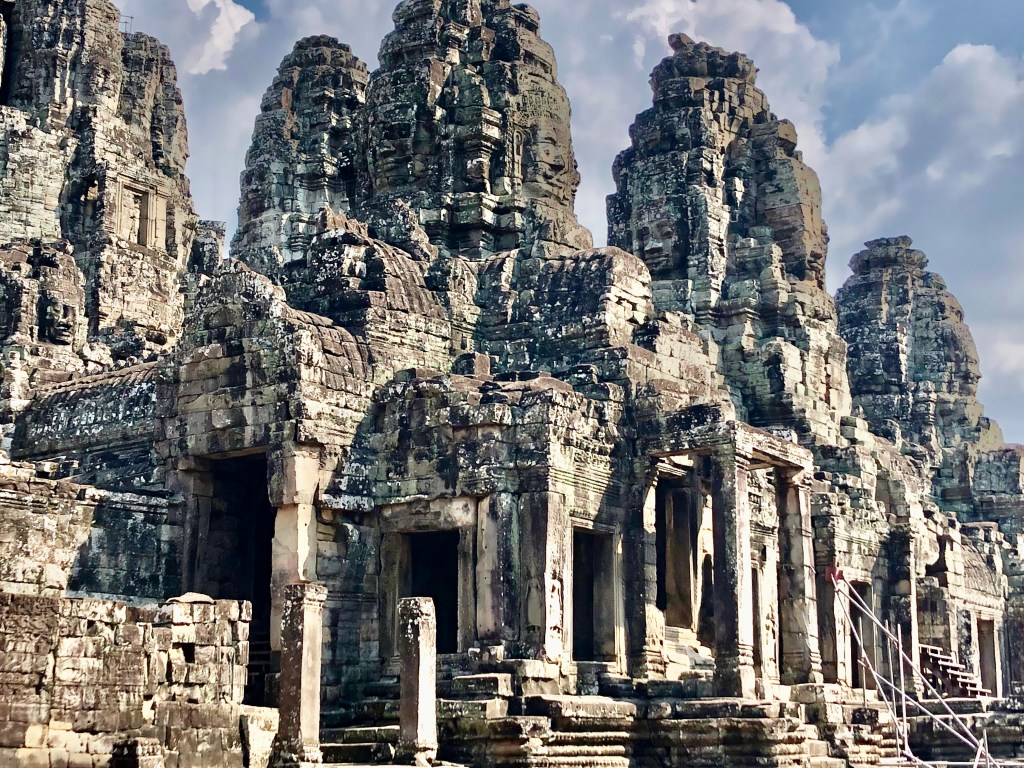
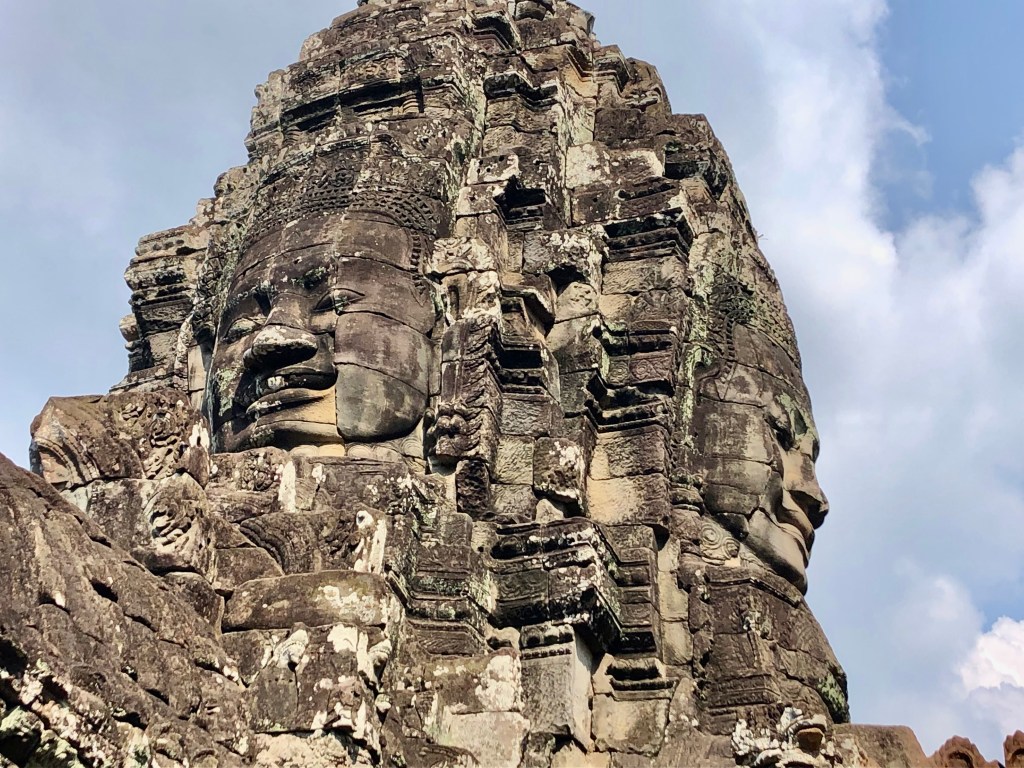
In the Bayon complex we saw uniquely decorated towers and walls that my photos don’t do justice to. This was built as a Khmer Buddhist state temple in the late 12th/early 13th century and occupied the center of the rulers capital city, Angkor Thom.
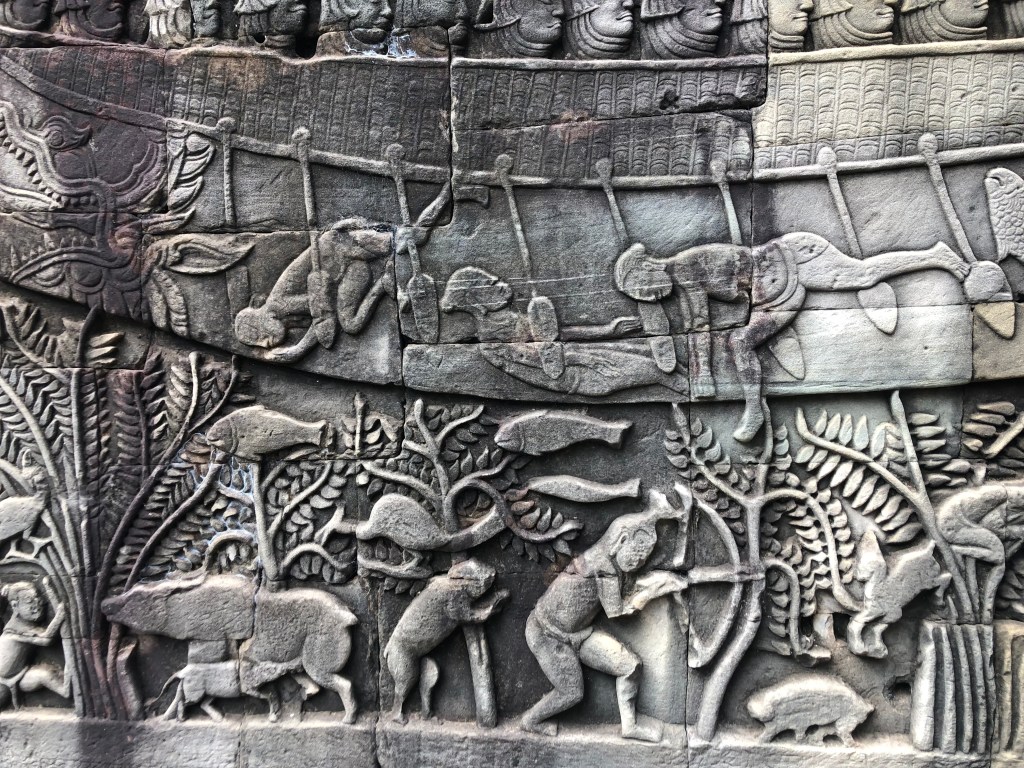
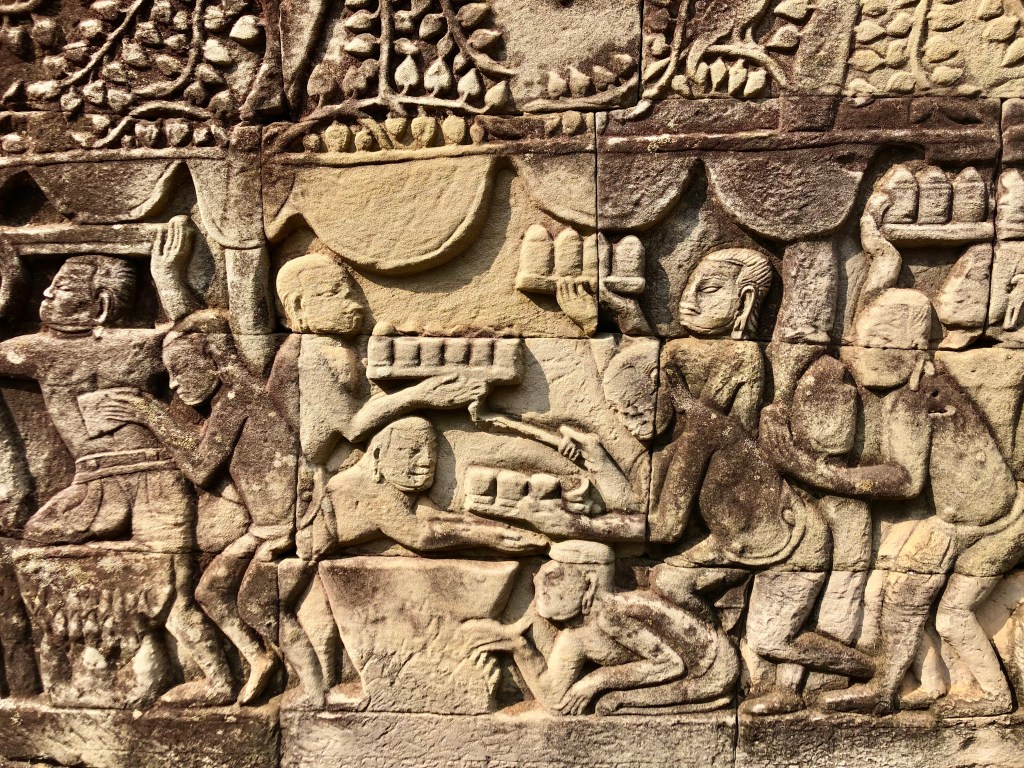
What stands out here are the 4 smiling or serene faces on the many towers that are part of the buildings and also the bas relief art that depict every day life rather than stories of Gods. Amazing, and again lots of work needed if the temples are ever to be repaired.
We started around 8am and finished our touring around 3 and were so ready to jump into the pool! And glad we had seen some of wonders of this area.
It took us two days to get to Cambodia after leaving our tour in Can Tho. After the floating market tour and breakfast we were dropped off at a bus station while everyone else headed back to Saigon-HCMC.
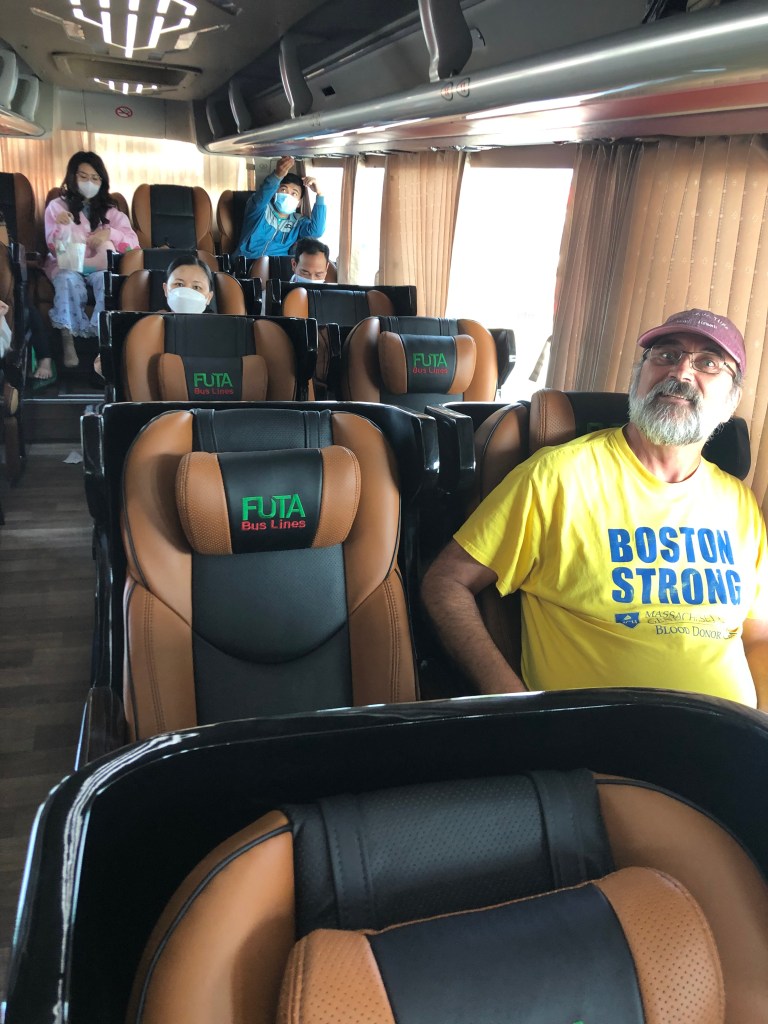
Our nice (!) bus took about 4 1/2 hours to get us north to Cau Doc so we can travel to Phnom Penh Cambodia by Fast Boat!
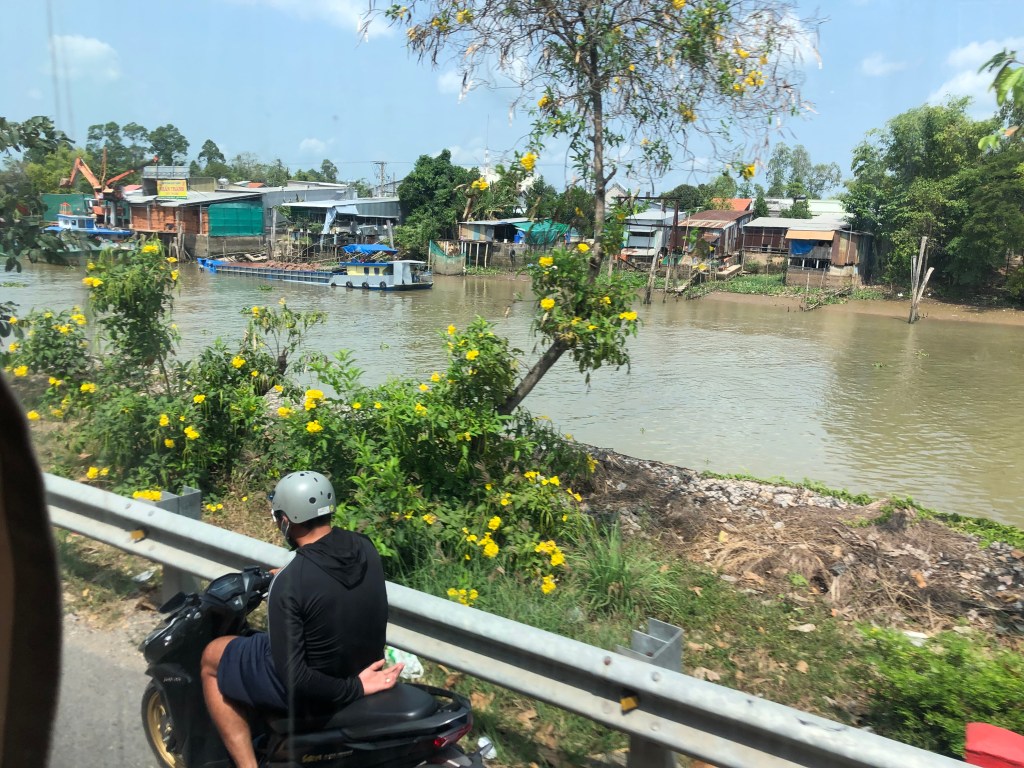
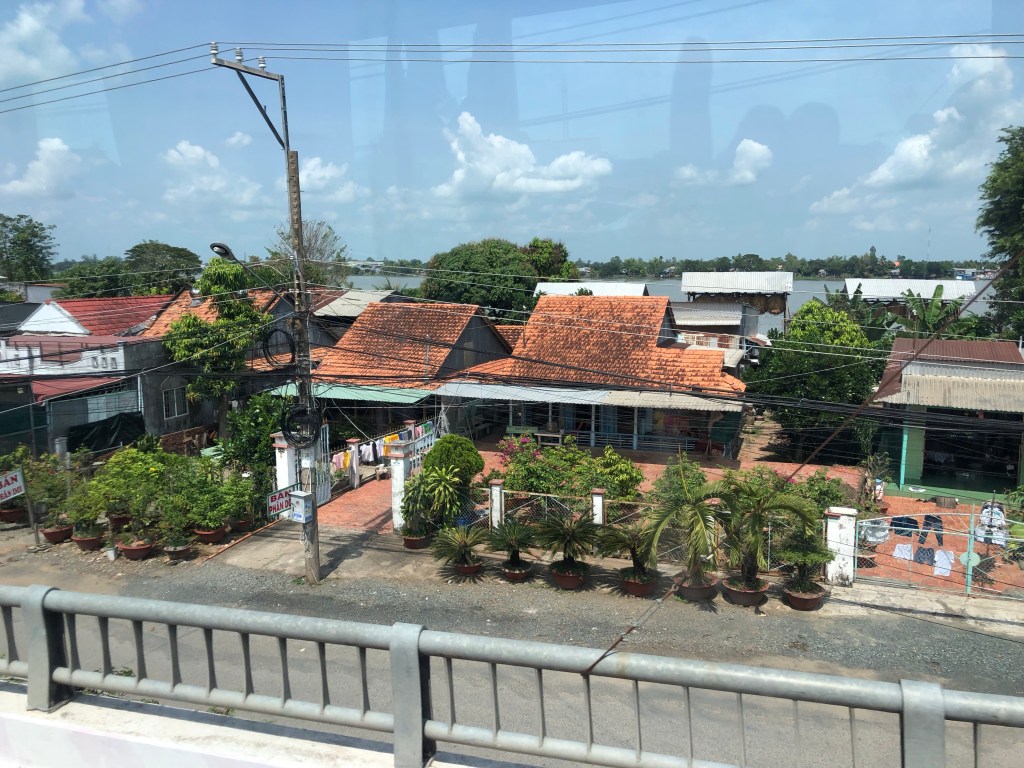
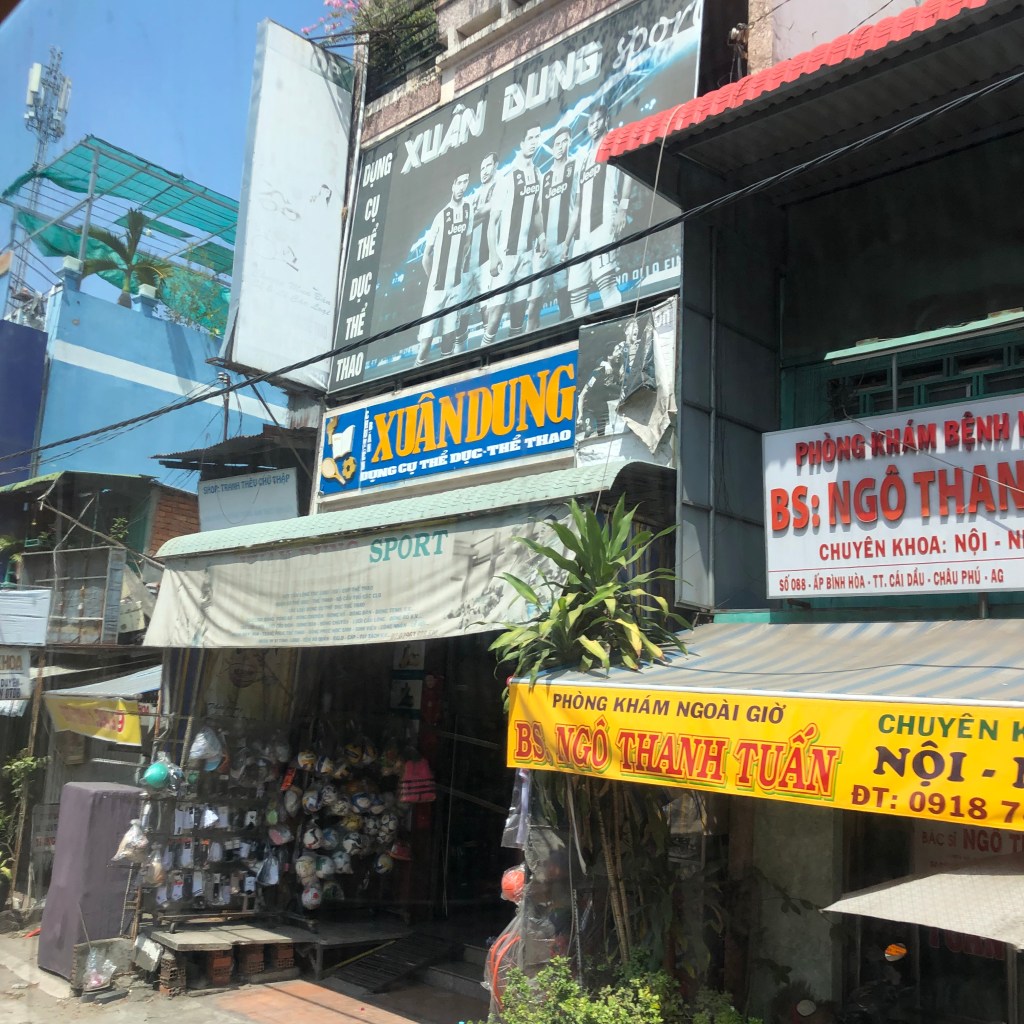
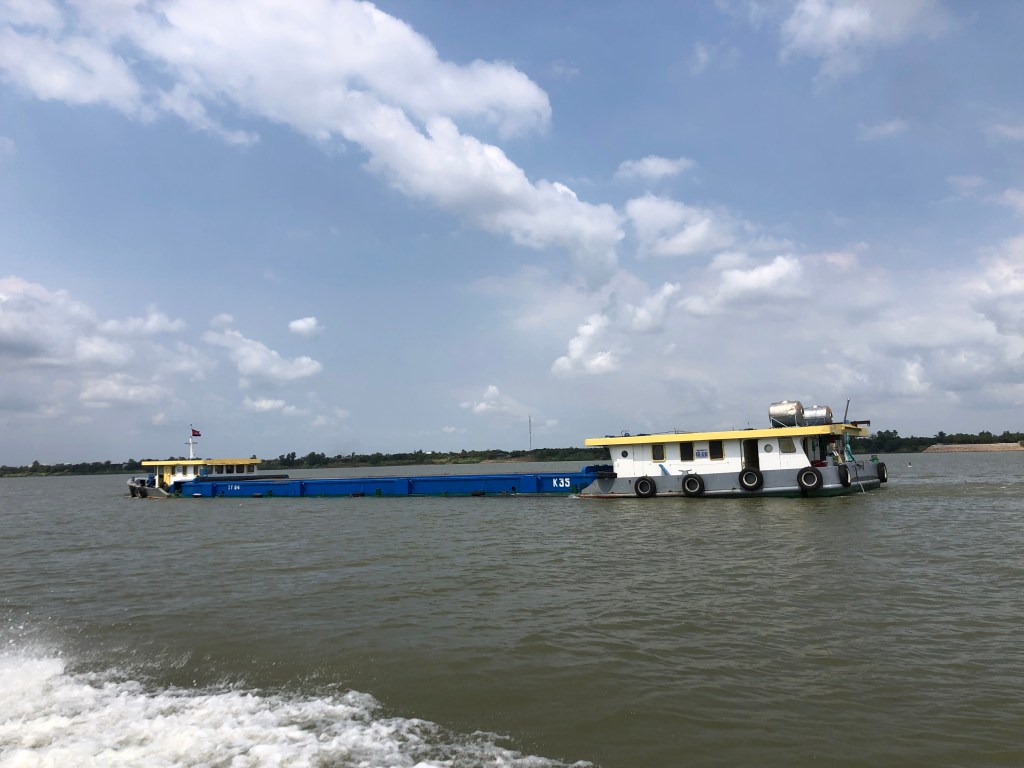
Scenes along the Mekong and Dirk in the excellent bus (finally)
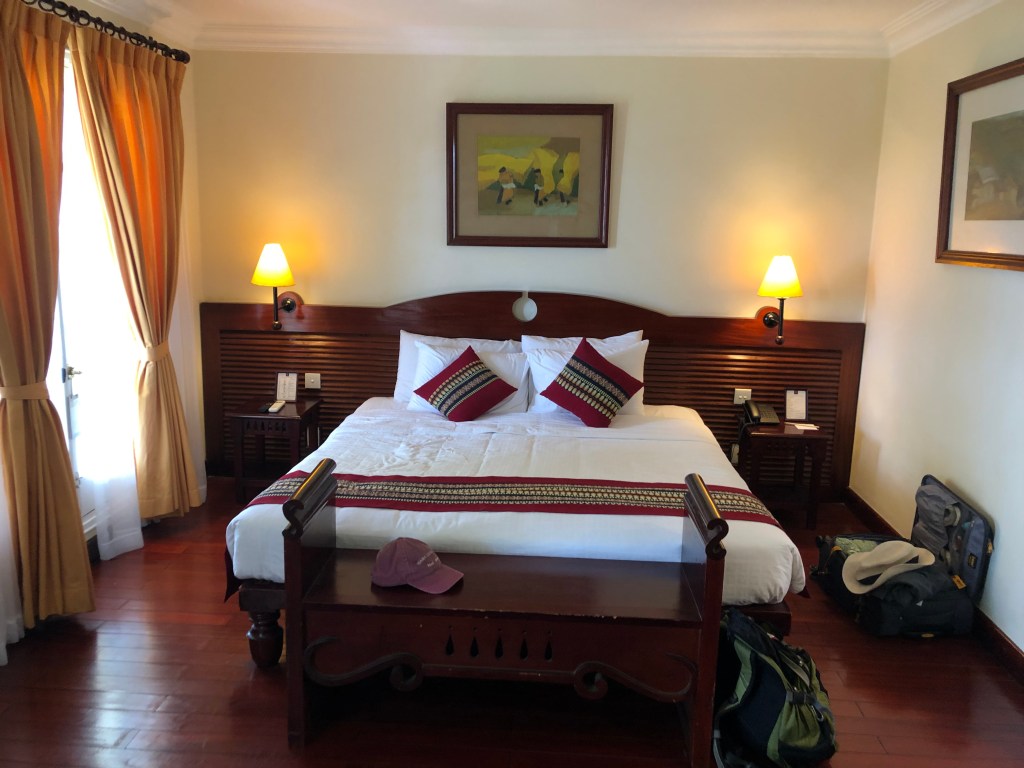
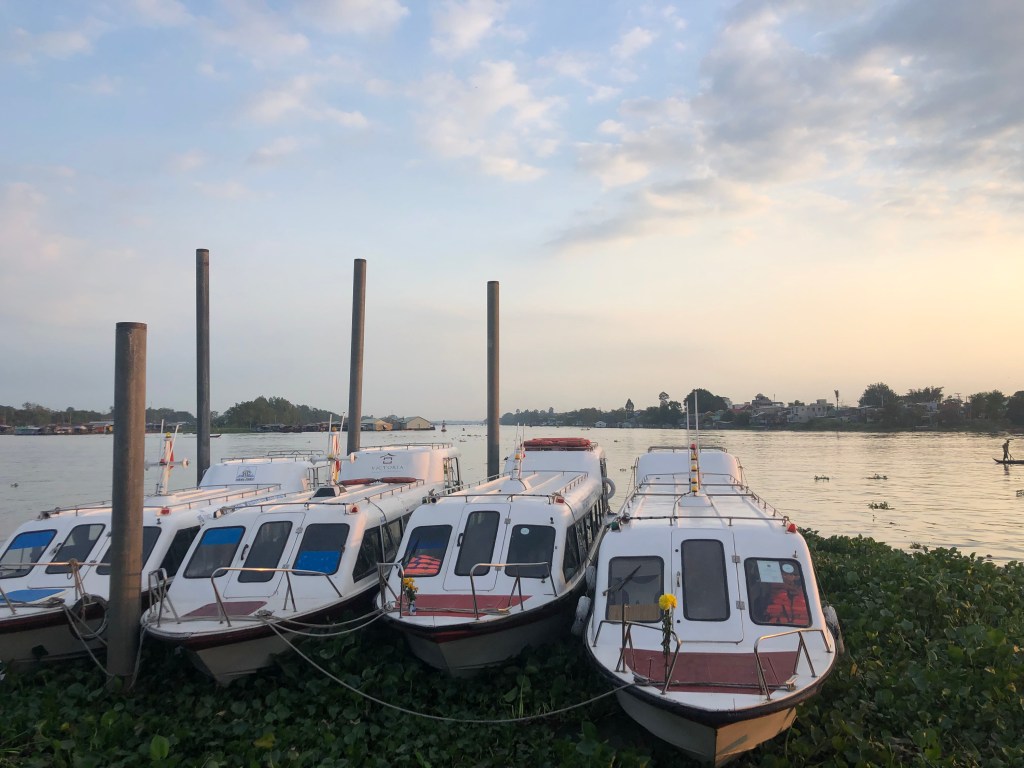
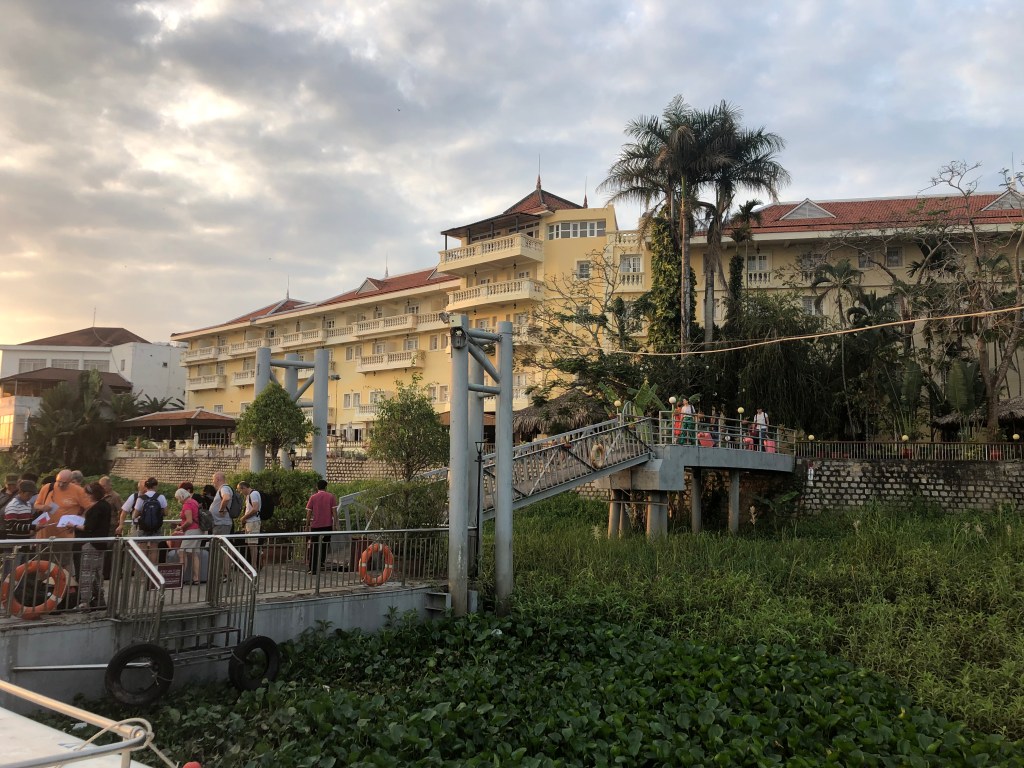
We stayed in Cau Doc in the very classy Victoria Hotel and in the morning walked down to the dock to our boat.
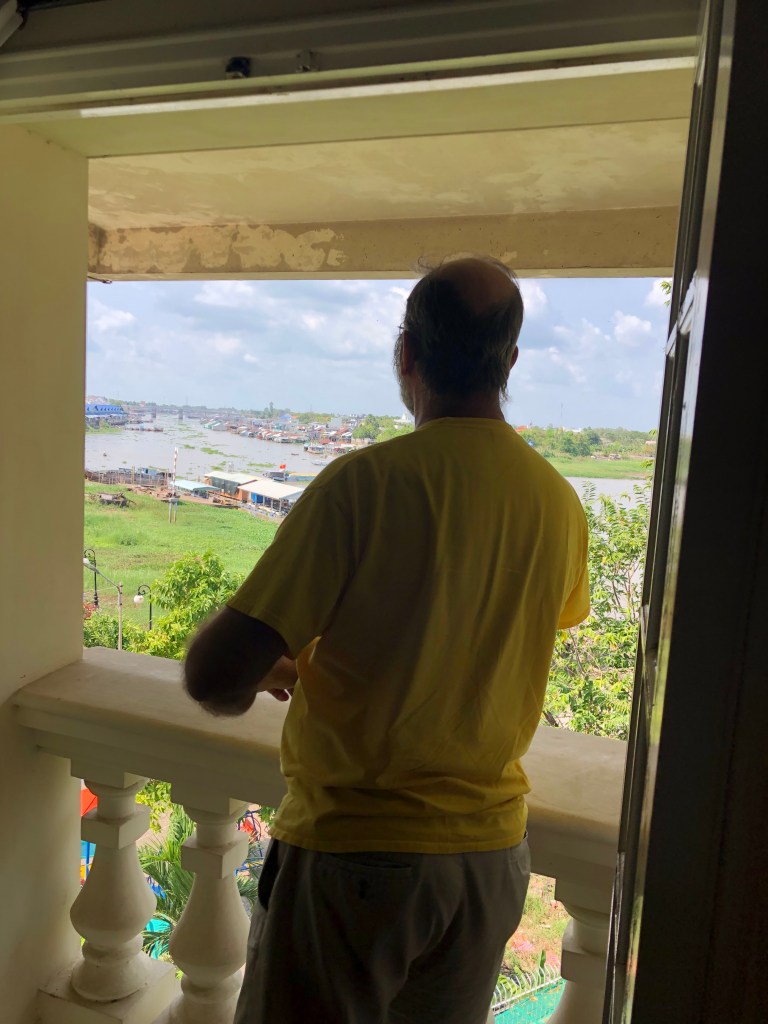
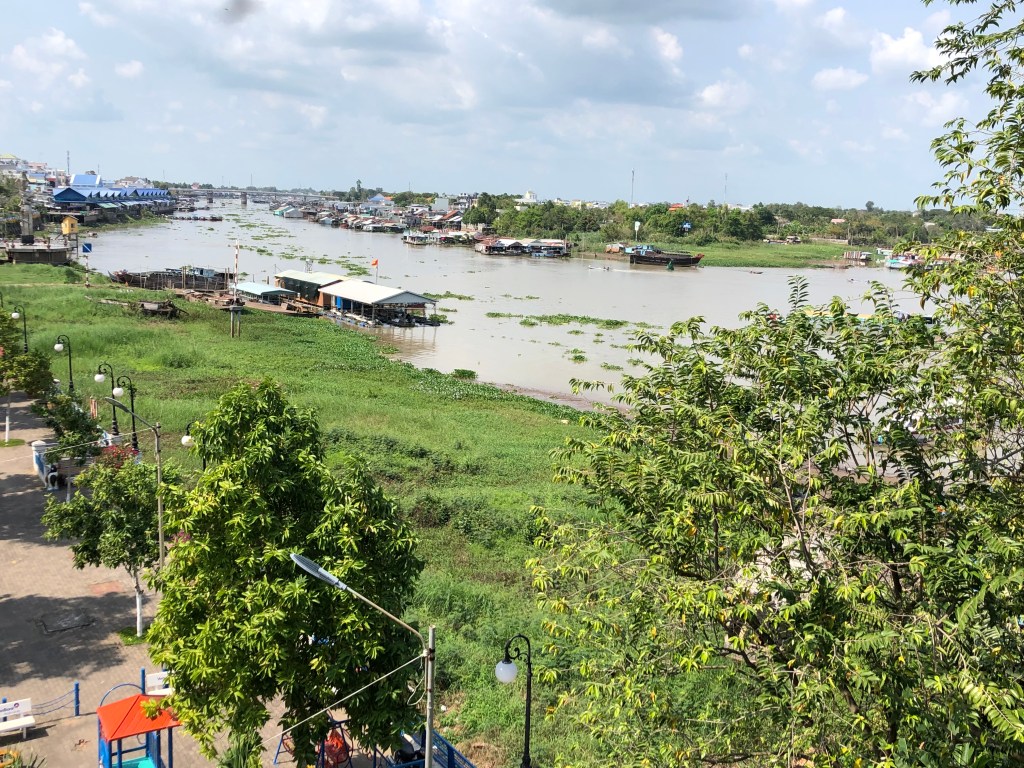
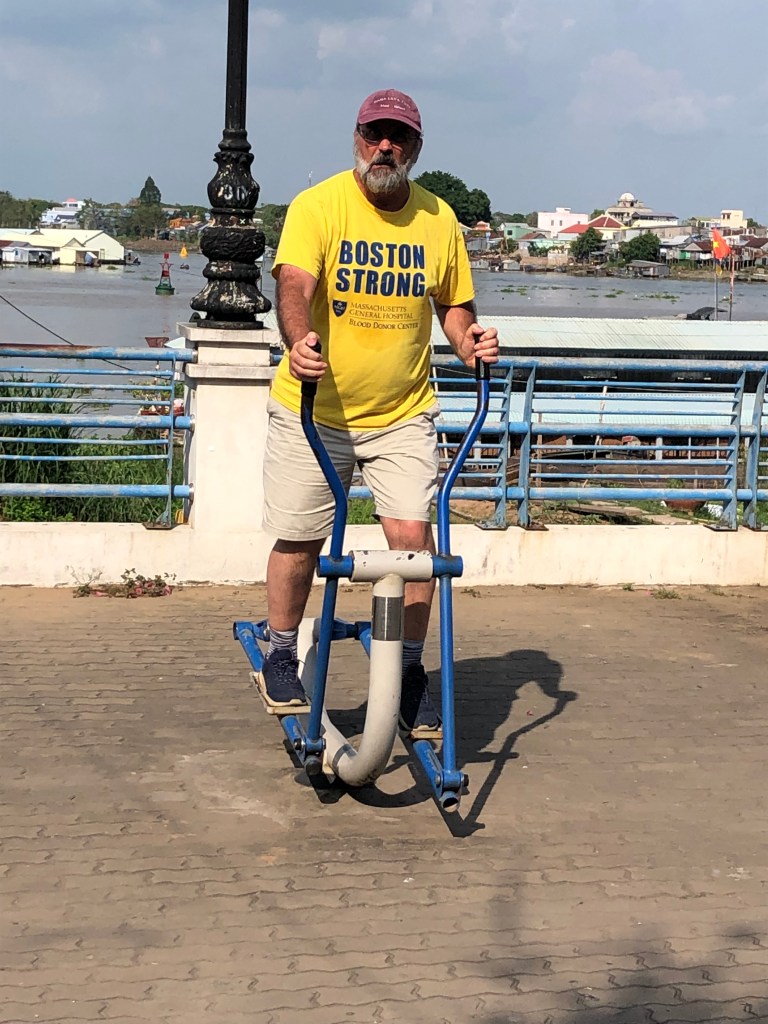
View from windowDirk exercising in 95 degrees? No!In seating areaOpen section
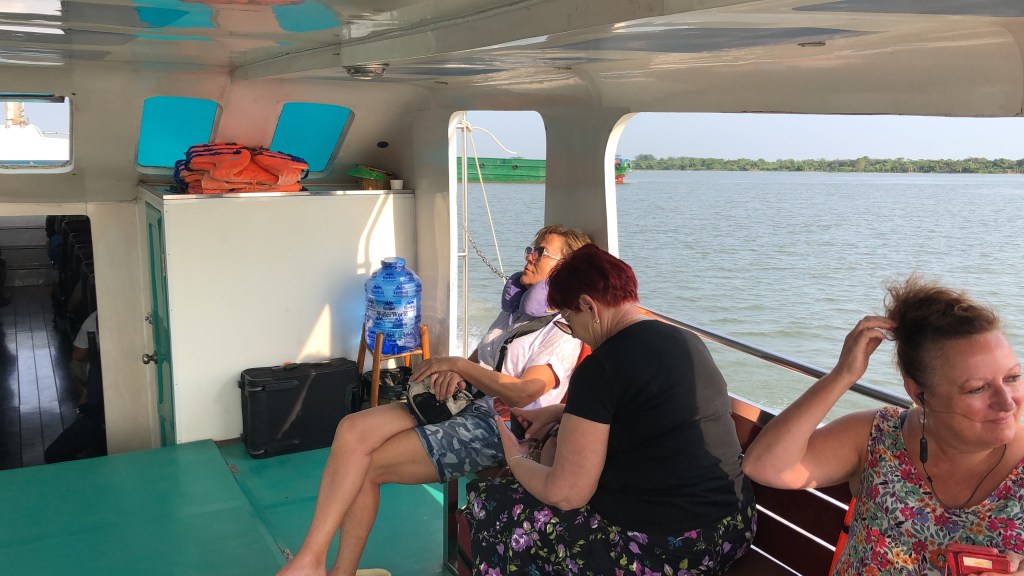
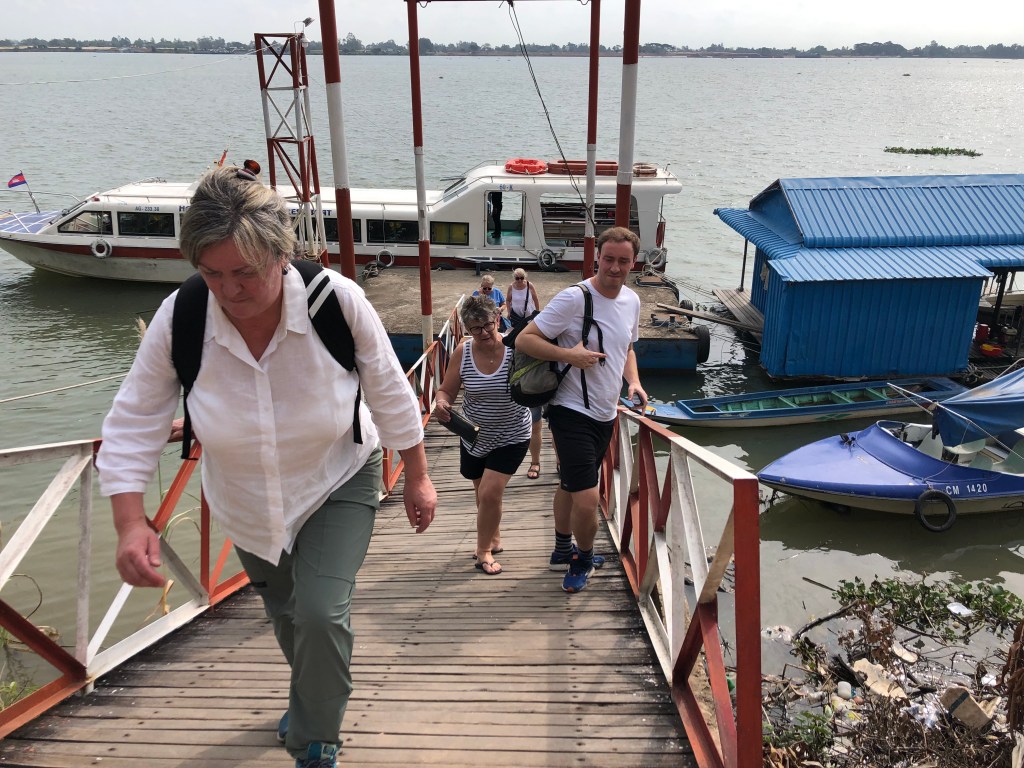
The boat is fast and comfortable (a little too warm at times) and we could sit outside in the back as well. Nice (long) trip. And now we have two more times we’ve done customs from a boat.
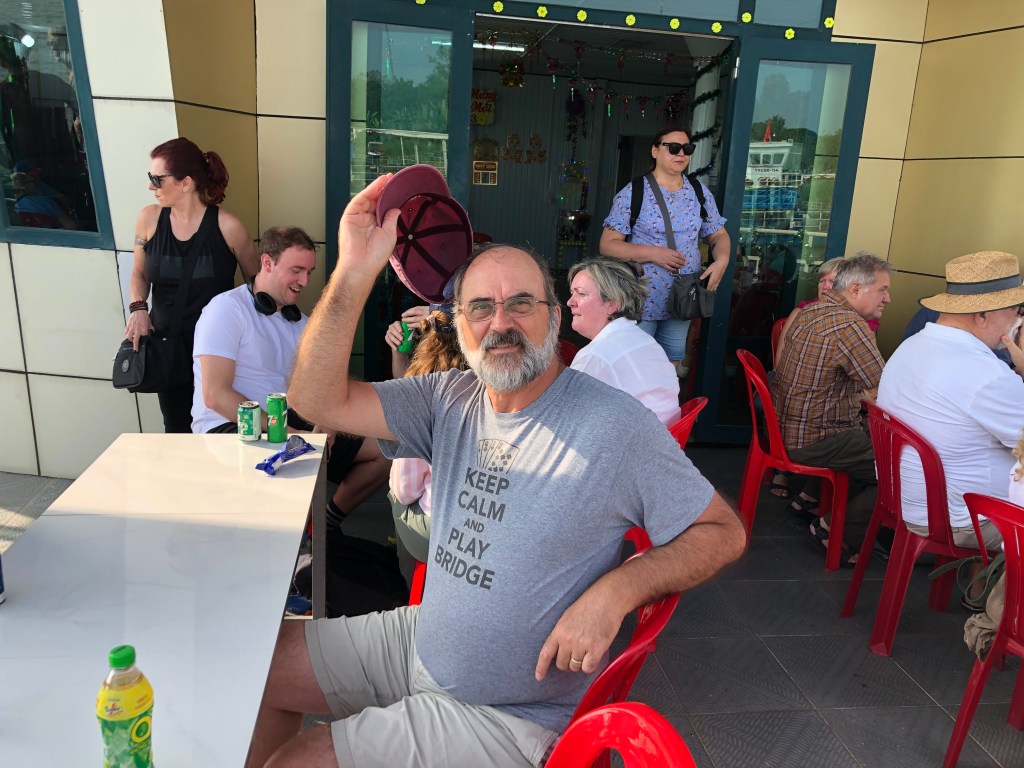
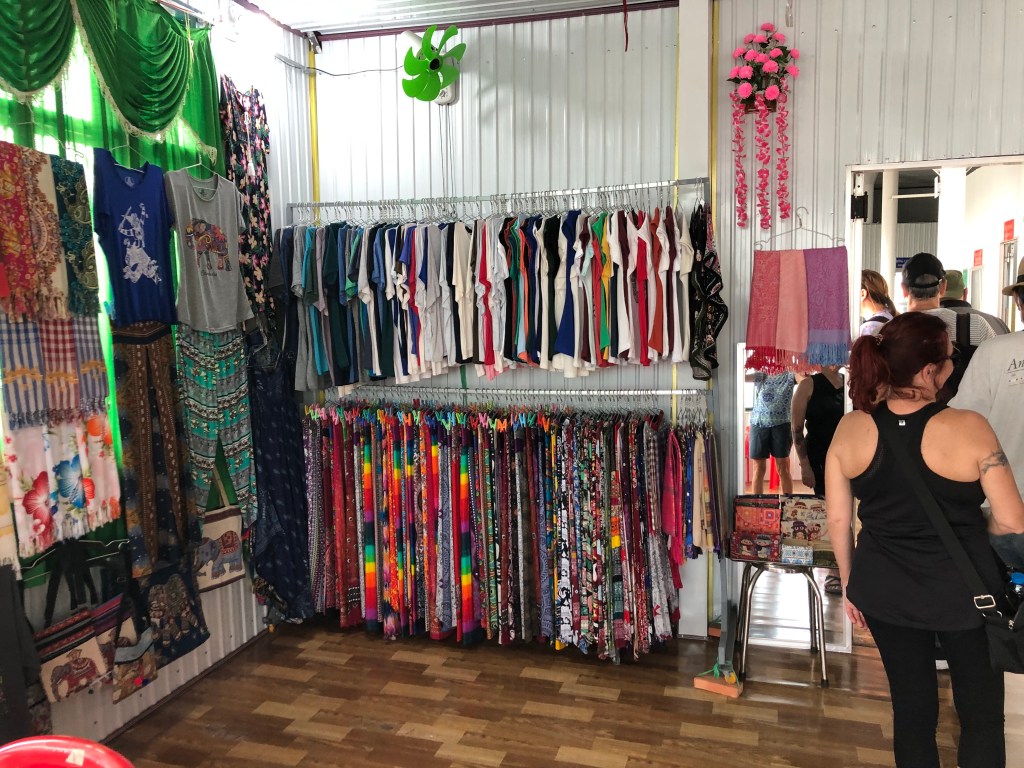
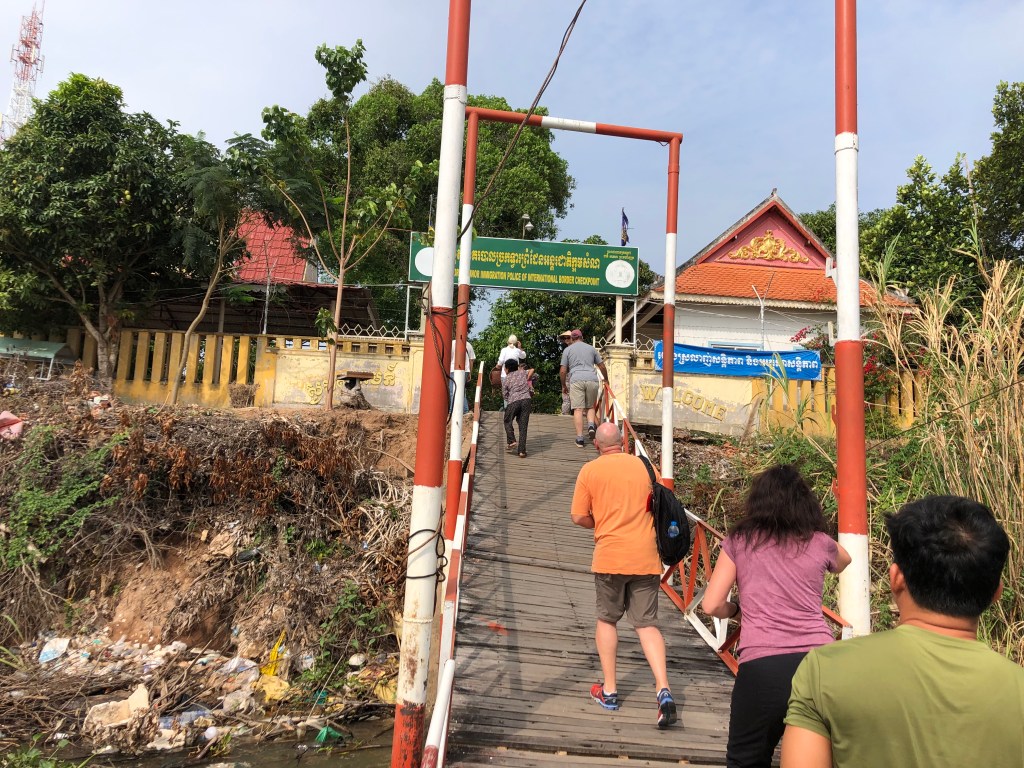
Comity Vietnamese exit customesComplete with store and snacksCambodia Entrance Visa from boatSmall cabin used to stamp passports, etc.
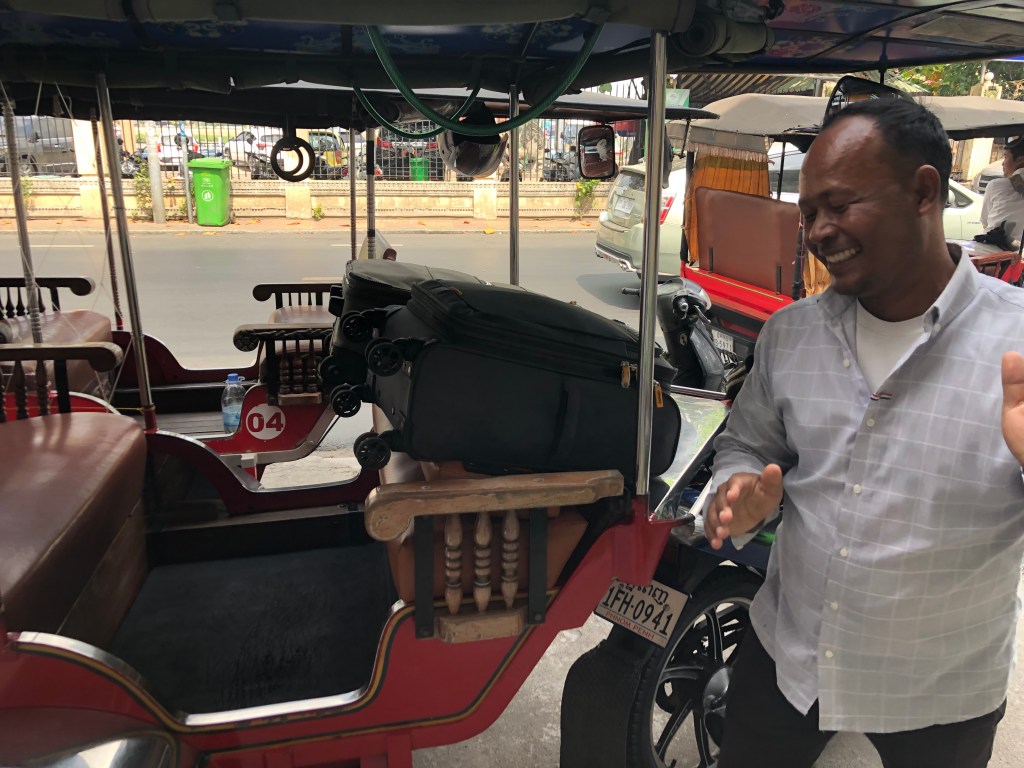
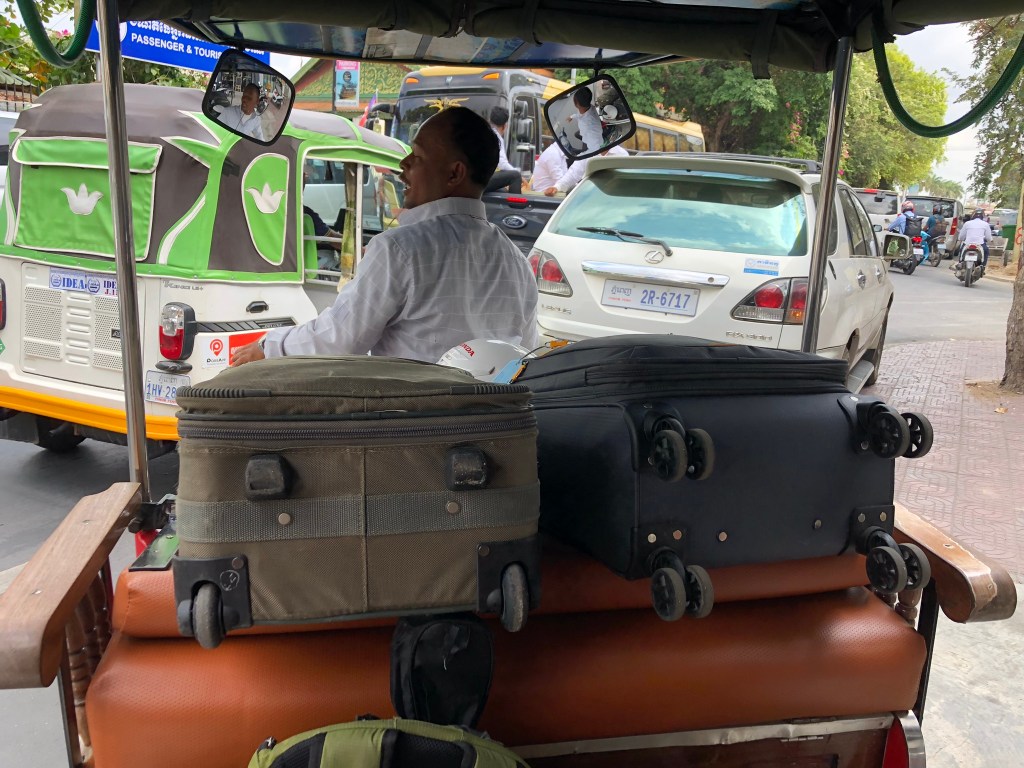
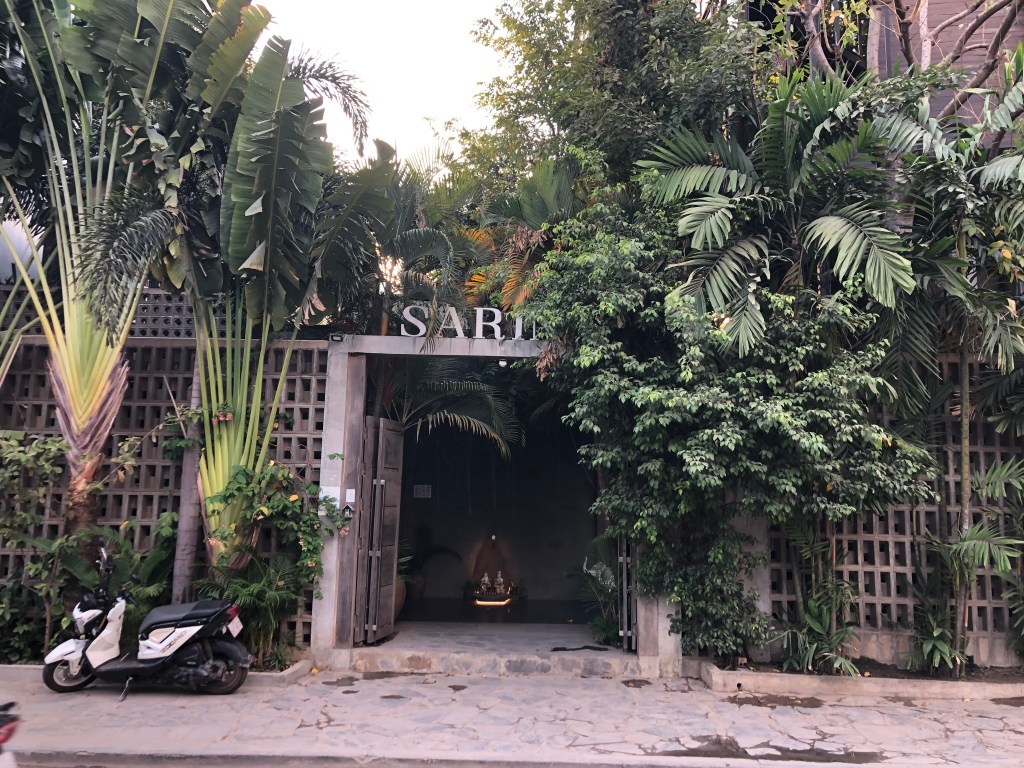
A bad-jaj (motorcycle with a double seat behind) took us to our hotel Sarina which is outside of the tourist area but very nice. (I booked us closer to the airport because we thought we’d fly to our next destination but the prices are insane so here comes another bus ride!) We walked around a looking for lunch – trouble finding any food mid-afternoon outside of the tourist area- not too much English- veggies and rice – a-ok!
Our Bad-Jan rideOur unique hotel – greens and palms in otherwise working area













 2023 Travels of Pat and Dirk in Vietnam and other S.E. Asia countries